
Agnippe laudatella
(Walsingham, 1907)
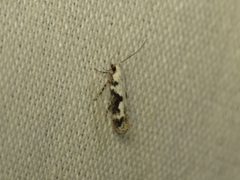
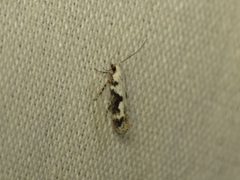
Agnippe laudatella is a small gelechiid with a wingspan of approximately 10.5 mm, to California. The is characterized by distinctive white forewings with complex brownish fuscous patterning. Larvae feed on Quercus (oak) species.
Pronunciation
How to pronounce Agnippe laudatella: /æɡˈnɪp.i laʊˈdæt.ə.lə/
These audio files are automatically generated. While they are not always 100% accurate, they are a good starting point.
Identification
Distinguished from other Agnippe by the specific configuration of forewing markings: the large costal patch with oblique inner edge, upward indentation, and straight outer edge margined with white. The combination of white ground color with brownish fuscous patterning and pale gray hindwings is diagnostic. Similar gelechiids lack this particular arrangement of the elongate spot above the wing middle and the indented large patch.
Images
Habitat
Associated with oak (Quercus) in California, though specific habitat preferences beyond plant presence are not documented.
Distribution
to California, United States. No records from other states or countries.
Diet
Larvae feed on Quercus (oaks). feeding habits unknown.
Host Associations
- Quercus - larval plant-level association; specific oak not documented
Ecological Role
or feeder on oak foliage as larva; specific ecological impacts unknown.
Similar Taxa
- Other Agnippe speciesShare characteristics but differ in specific forewing pattern elements, particularly the configuration of the large costal patch and the elongate spot above the wing middle
- Other GelechiidaeSimilar size and general form, but A. laudatella distinguished by its distinctive white and brownish fuscous forewing pattern with specific arrangement of markings
More Details
Taxonomic authority
Described by Thomas de Grey, 5th Baron Walsingham in 1907
Observation frequency
38 observations recorded on iNaturalist as of source date, suggesting it is not frequently encountered