
Scrobipalpa acuminatella
(Sircom, 1850)
pointed groundling
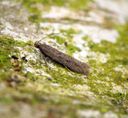
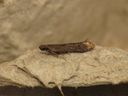
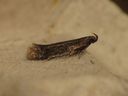
A small gelechiid with distinctive pointed forewings, found across Europe, Asia, and recently established in Canada. The is notable for its association with thistles and related Asteraceae plants. fly from spring through summer, with larvae mining or feeding on foliage.
Pronunciation
How to pronounce Scrobipalpa acuminatella: /skroʊbiˈpælpə əˌkjuːmɪnəˈtɛlə/
These audio files are automatically generated. While they are not always 100% accurate, they are a good starting point.
Identification
The combination of small size (10.5–14.5 mm wingspan), distinctly pointed forewings especially in females, and the characteristic palp structure (terminal joint shorter than second) separates this from . Dark fuscous forewings with ochreous discal mixing and indistinct darker stigmata are diagnostic. In North America, it may be confused with native Scrobipalpa , but the pointed forewing apex and specific associations with thistles aid recognition.
Images
Habitat
Open supporting thistle , including meadows, grasslands, areas, and agricultural margins. Associated with both native and weedy Carduus and Cirsium stands.
Distribution
Widespread across Europe; extends east through Turkey, southern Siberia, and Central Asia (Afghanistan, northern Iran, western Kazakhstan) to China (Anhui). Recently documented in North America with confirmed records from Ontario and Québec, Canada.
Seasonality
active from April to August, with exact timing varying by geographic location and local climate conditions.
Diet
Larvae feed on Carduus and Cirsium (thistles), including cotton thistle (Onopordum acanthium), Artemisia species, and Serratula tinctoria. Mining or feeding occurs within foliage.
Host Associations
- Carduus - larval foodplant
- Cirsium - larval foodplant
- Onopordum acanthium - larval foodplantcotton thistle
- Artemisia - larval foodplant
- Serratula tinctoria - larval foodplant
Life Cycle
Complete with larval development occurring on plants; specific details of site and stage not documented in available sources.
Ecological Role
Herbivore specializing on thistles and related Asteraceae; may contribute to biological regulation of weedy thistle in some contexts.
Human Relevance
Potential interest for biocontrol of thistles due to specificity; no significant economic impact documented.
Similar Taxa
- Other Scrobipalpa speciesMany share similar size and coloration; S. acuminatella distinguished by pointed forewings, palp proportions, and associations.
- Gelechiidae gen. spp.Small gelechiids with grey-brown coloration are numerous; wing shape and detailed genitalia examination required for definitive identification.
More Details
North American establishment
First Canadian records from Ontario and Québec represent a recent range expansion, likely via human-mediated introduction. status and potential spread in North America remain under investigation.