
Fascista cercerisella
(Chambers, 1872)
Redbud Leaffolder Moth, redbud leaffolder
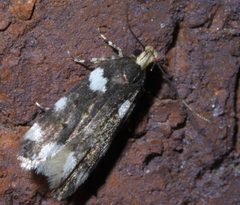
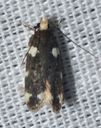
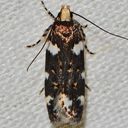
Fascista cercerisella, commonly known as the redbud leaffolder , is a small gelechiid moth native to eastern and central North America. The is notable for its specialized larval association with eastern redbud (Cercis canadensis), where larvae skeletonize leaves by feeding within folded leaf structures. are active from spring through fall, with geographic variation in time— in northern and possibly in the south.
Pronunciation
How to pronounce Fascista cercerisella: //fæˈsɪs.tə ˌsɜːr.sə.rɪˈsɛl.ə//
These audio files are automatically generated. While they are not always 100% accurate, they are a good starting point.
Identification
are small gelechiid moths (13–16 mm wingspan) requiring dissection or genital examination for definitive identification. Larvae are more readily identified by their distinctive zebra-striped appearance and association with folded leaves of eastern redbud (Cercis canadensis). The combination of plant specificity and larval shelter-building distinguishes this from other leaf-folding Lepidoptera.
Images
Habitat
Associated with woodlands and forest edges where the plant eastern redbud (Cercis canadensis) occurs. Larval is specifically the foliage of this host plant.
Distribution
Eastern and central United States: from Pennsylvania and Maryland south to Florida, west to Texas, and north to Kansas.
Seasonality
active April to October in southern portions of range; shorter season in northern range. One per year in the north, possibly two generations in the south.
Diet
Larvae feed exclusively on Cercis canadensis (eastern redbud), skeletonizing leaves. feeding habits not documented.
Host Associations
- Cercis canadensis - larval food plantEastern redbud; larvae skeletonize leaves within folded leaf structures
Life Cycle
Complete with , larva, pupa, and stages. Larvae develop within folded or rolled leaves of plant. stage not explicitly documented in sources.
Behavior
Larvae construct leaf folds or rolls on plant foliage, feeding within these shelters and skeletonizing the leaf tissue. This shelter-building gives the its 'leaffolder'.
Ecological Role
Herbivore specializing on eastern redbud foliage; specific functions not documented.
Human Relevance
Minor pest of ornamental eastern redbud trees due to leaf damage caused by larval feeding; not considered economically significant.
Similar Taxa
- Other Gelechiidae speciesMany small gelechiid moths are morphologically similar and require dissection for identification; plant association and larval are key distinguishing features for F. cercerisella
More Details
Etymology
The specific epithet 'cercerisella' references the of the plant Cercis, indicating the close taxonomic and ecological association between the and its food plant.
Observation frequency
The has been documented in over 2,300 iNaturalist observations, indicating it is regularly encountered within its range despite its small size.