
Fascista
Busck, 1939
Species Guides
3- Fascista bimaculella
- Fascista cercerisella(Redbud Leaffolder Moth)
- Fascista quinella
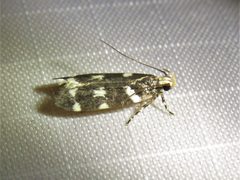
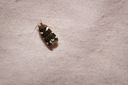
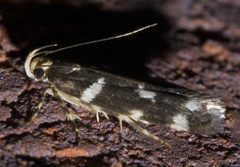
Fascista is a of small in the Gelechiidae, established by Busck in 1939. The genus contains three described found in North America, including the redbud leaffolder moth (F. cercerisella), whose larvae are known to fold leaves of eastern redbud (Cercis canadensis) as feeding shelters. These moths are part of the diverse gelechiid fauna associated with deciduous forest .
Pronunciation
How to pronounce Fascista: /faˈskista/
These audio files are automatically generated. While they are not always 100% accurate, they are a good starting point.
Images
Habitat
Deciduous woodlands and forest edges. within this are associated with broadleaf trees, particularly leguminous such as eastern redbud (Cercis canadensis).
Distribution
North America. Records indicate presence in the eastern and central United States, including Missouri and Illinois.
Diet
Larvae feed on foliage of trees. Fascista cercerisella specifically consumes leaves of eastern redbud (Cercis canadensis), with larvae folding leaves to create protected feeding shelters.
Host Associations
- Cercis canadensis - larval plantEastern redbud; larvae fold leaves for shelter while feeding
Life Cycle
Complete with , larva, pupa, and stages. Larvae are leaf-folders, creating distinctive folded leaf shelters on plants.
Behavior
Larvae exhibit leaf-folding , drawing together edges of leaves with silk to form protective enclosures within which they feed and develop.
Ecological Role
Herbivore in deciduous forest . Larval leaf-folding activity creates minor structural modification of foliage.
Human Relevance
Minor aesthetic impact to ornamental redbud trees through leaf-folding damage; not considered a significant pest.
Similar Taxa
- Other Gelechiidae generaMany small gelechiid moths share similar size and general appearance; accurate identification requires examination of genitalia or larval association and .
More Details
Species composition
The contains three described : Fascista bimaculella (Chambers, 1872), Fascista cercerisella (Chambers, 1872), and Fascista quinella (Zeller, 1873). F. cercerisella is the most commonly encountered and best known due to its distinctive larval on redbud.
Taxonomic history
Originally described in 1939 by August Busck, this brought together previously placed in other gelechiid genera based on shared morphological characteristics.