
Faculta triangulella
(Busck, 1907)
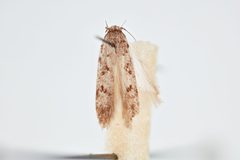
Faculta triangulella is a small in the Gelechiidae, known from California and Arizona. The is characterized by distinctive triangular dark markings on the forewings. Its and remain poorly documented beyond basic morphological description.

Pronunciation
How to pronounce Faculta triangulella: //fəˈkʌltə ˌtraɪæŋɡjuˈlɛlə//
These audio files are automatically generated. While they are not always 100% accurate, they are a good starting point.
Identification
Distinguished from other Faculta and similar small gelechiid moths by the pair of blackish triangular spots on the forewing —one medial, one terminal—with faint extensions to the . The roseate tinge to the forewings and heavily dark-scaled third provide additional diagnostic characters. The ochreous preceding the medial triangle are a subtle but useful field mark.
Images
Appearance
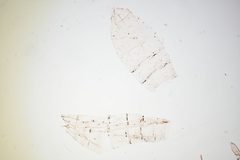
Small with wingspan of 12–13 mm. Forewings light fuscous, heavily overlaid with dark fuscous and with a roseate tinge. Two prominent blackish triangular spots: one centered on the middle of the with one point touching the fold, preceded basally by a few ochreous scales; another similar spot at the end of the cell. Edges of both spots faintly continued to the costal edge. third of wing heavily overlaid with blackish scales. Hindwings light silvery fuscous.
Distribution
Known from California and Arizona, United States. Specific associations within this range have not been documented.
More Details
Taxonomic note
The Faculta contains few described , and F. triangulella appears to be among the least known. No specimens have been recorded on iNaturalist as of the knowledge cutoff.
Sources and further reading
- BugGuide
- Wikipedia
- GBIF taxonomy match
- iNaturalist taxon
- Catalogue of Life
- Where Are All the Butterflies? | Bug Squad
- How an Evolutionary Biologist Found Her Place in Entomology
- Bug Eric: Moth Monday: Palo Verde Webworm
- Held Without R-ant-som: The Kidnapper Ant That Steals Workers From 20 Other Species
- Bug Eric: Raid of the Slave-makers
- Did One Praying Mantis Give Rise to an All-Female Species?