Chionodes obscurusella
(Chambers, 1872)
boxelder leafworm moth
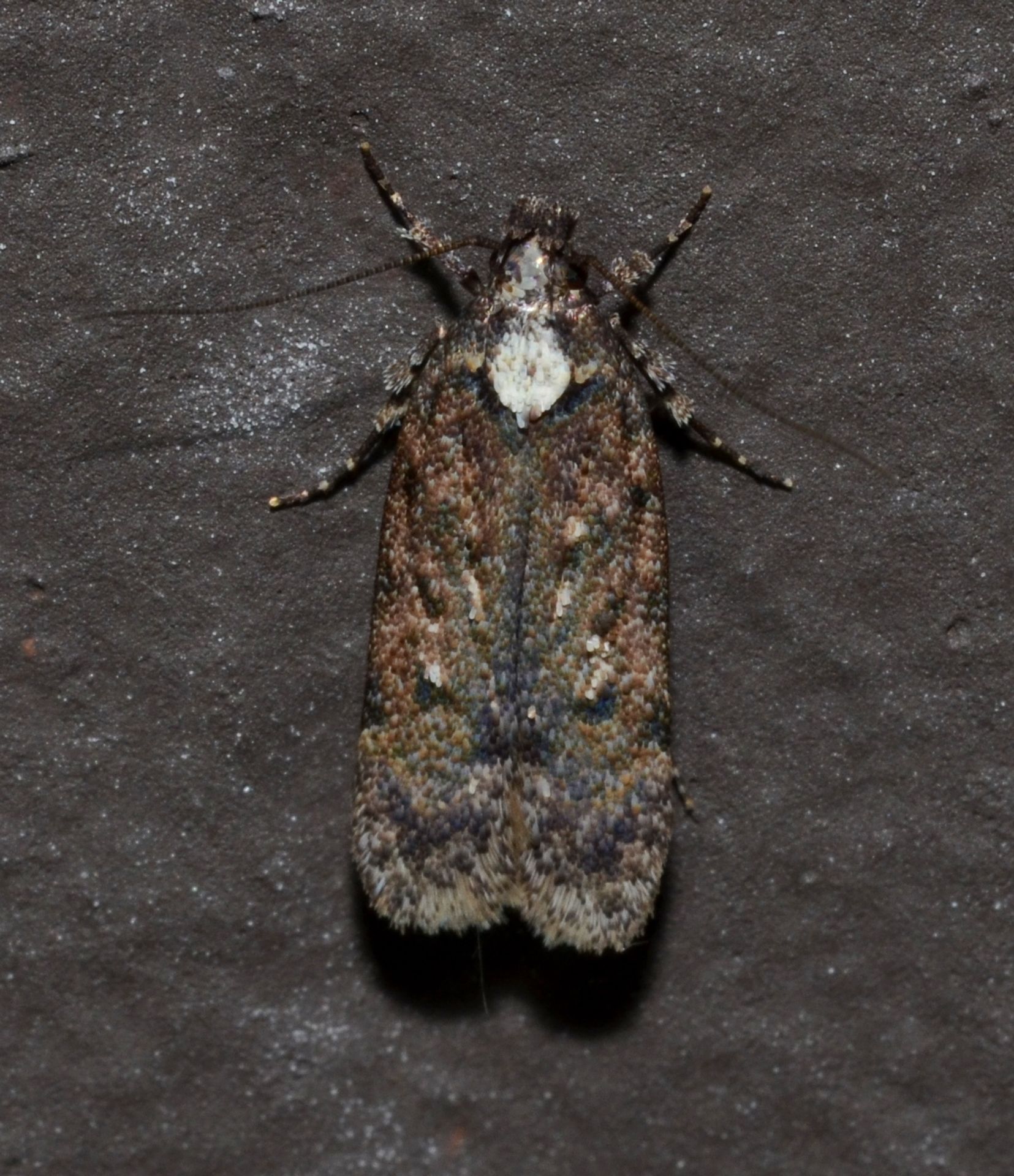
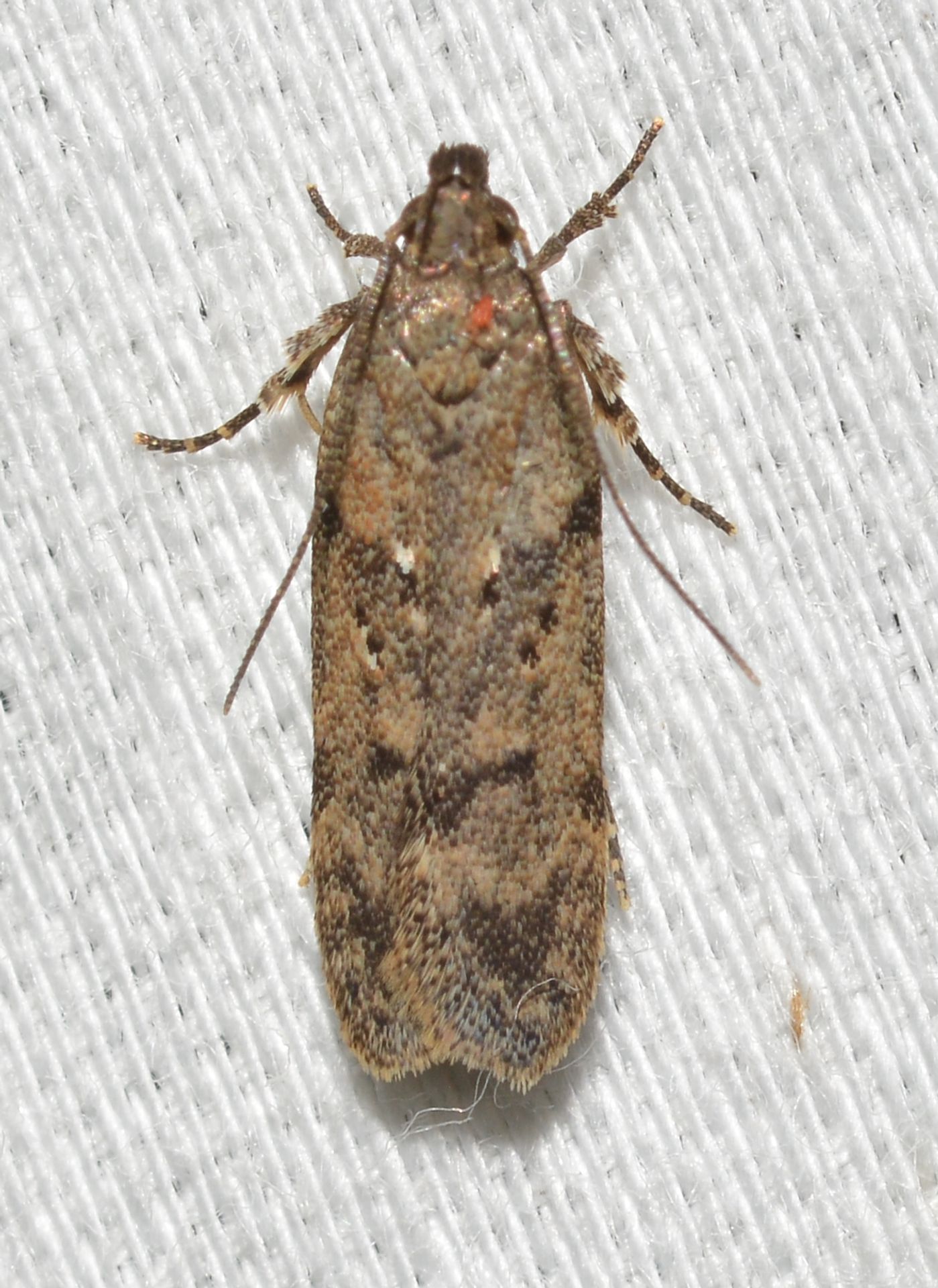
Chionodes obscurusella, commonly known as the boxelder leafworm , is a small gelechiid moth native to North America. The has a wingspan of approximately 12 mm and exhibits distinctive forewing patterning with black spots and dashes on a dull ochreous-fuscous background. Larvae are leaf-tiers, constructing shelters by tying leaves together on their plants. The species is part of a Nearctic species group associated with hardwood trees in the Acer, Quercus, and Salix.
Pronunciation
How to pronounce Chionodes obscurusella: //kaɪˈoʊnədiːz əbˌskjʊrəˈsɛlə//
These audio files are automatically generated. While they are not always 100% accurate, they are a good starting point.
Identification
Distinguished from similar Chionodes by specific forewing pattern: combination of sub-costal basal dot, costal dashes at basal and thirds, and broad ill-defined blackish patch in . Male and female genitalia provide definitive identification; the obscurusella group species require dissection and examination of genitalic structures for reliable separation. Distinguished from other leaf-tying gelechiids by association and geographic range.
Images
Appearance
Small with wingspan approximately 12 mm. Forewings dull ochreous fuscous with complex black spotting pattern: small black sub-costal dot at wing base; small black dash from basal third of ; broad ill-defined blackish patch below and beyond this dash occupying middle of ; obscure shading of black scales on middle of costa; black dash just before third of costa with irregular ill-defined black line below extending to dorsum; faint dusting of black scales near outer margin. Hindwings very pale, semi-transparent whitish-fuscous.
Habitat
Associated with deciduous hardwood forests and urban plantings where maples (Acer) occur. Larval consists of living foliage of Acer negundo (boxelder) and Acer saccharum (sugar maple), where leaves are tied together to form shelters.
Distribution
North America: Nova Scotia to Manitoba, south to North Carolina and Oklahoma. Canadian records include Alberta. Core range spans eastern and central North America with western extensions.
Diet
Larval stage feeds on foliage of Acer negundo (boxelder) and Acer saccharum (sugar maple). feeding habits not documented.
Host Associations
- Acer negundo - larval boxelder; larvae are leaf-tiers on this
- Acer saccharum - larval sugar maple; larvae are leaf-tiers on this
Life Cycle
Complete with leaf-tying larval stage. Larvae construct shelters by tying leaves together with silk. Specific details of placement, site, and number of per year not documented.
Behavior
Larvae exhibit leaf-tying , binding leaves together with silk to create protected feeding shelters. are presumably , consistent with Gelechiidae.
Ecological Role
Herbivore on maple foliage; leaf-tying creates minor damage to plant leaves. Specific role in or processes not documented.
Human Relevance
references association with boxelder (Acer negundo), a widely planted ornamental and native tree. Not considered an economically significant pest. Occasionally encountered by entomologists and naturalists due to relative abundance (over 9,000 iNaturalist observations).
Similar Taxa
- Other Chionodes species in obscurusella groupSix Nearctic in this group require examination of male and female genitalia for definitive identification; external similar among group members.
- Other Gelechiidae leaf-tiers on AcerShare leaf-tying habit and maple association; distinguished by specific forewing pattern and genitalic .
More Details
Taxonomic Note
Part of the Nearctic obscurusella group within Chionodes, characterized by association with hardwood (Acer, Quercus, Salix) and requiring genitalic examination for species-level identification.