
Chionodes hapsus
Hodges, 1999
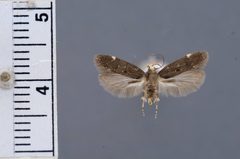
Chionodes hapsus is a small in the Gelechiidae, described by Hodges in 1999. It occurs across the eastern and central United States and southern Ontario, Canada. The is associated with oak forests, where its larvae feed on white oak and bur oak.

Pronunciation
How to pronounce Chionodes hapsus: //kaɪˈoʊniːdz ˈhæpsəs//
These audio files are automatically generated. While they are not always 100% accurate, they are a good starting point.
Images
Habitat
Oak forests and woodlands, associated with trees Quercus alba and Quercus macrocarpa.
Distribution
Eastern and central North America: southern Ontario (Canada), and United States records from New Jersey, New York, Maryland, Kentucky, Pennsylvania, Ohio, Missouri, Oklahoma, and Arkansas.
Diet
Larvae feed on Quercus alba (white oak) and Quercus macrocarpa (bur oak). diet unknown.
Host Associations
- Quercus alba - larval food plantwhite oak
- Quercus macrocarpa - larval food plantbur oak
Ecological Role
Herbivore; larvae consume oak foliage, contributing to nutrient cycling in oak woodland .
More Details
Taxonomic history
Described by Ronald B. Hodges in 1999. The specific epithet 'hapsus' is derived from Greek.