Chionodes fondella
(Busck, 1906)
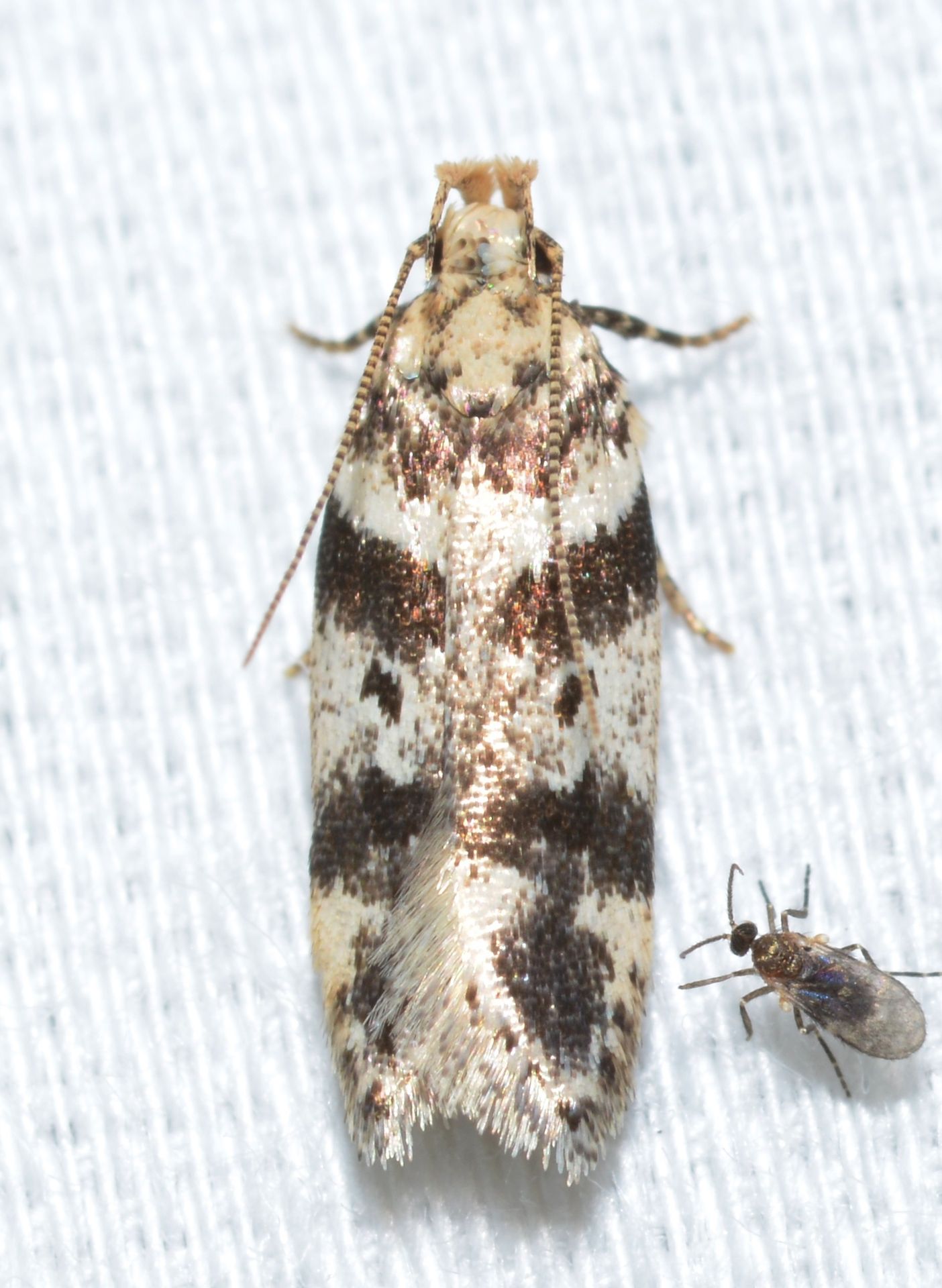
Chionodes fondella is a small gelechiid with a wingspan of 13–14 mm. It is distributed across eastern and central North America, from Nova Scotia west to Manitoba and south to Oklahoma and North Carolina. The larvae feed on specific plants in the Asteraceae and Lamiaceae .
Pronunciation
How to pronounce Chionodes fondella: /kiːˈəʊnoʊˌdiːz fɒnˈdɛlə/
These audio files are automatically generated. While they are not always 100% accurate, they are a good starting point.
Identification
Distinguished from similar Chionodes by the combination of two large conspicuous black costal spots on whitish ochreous forewings—one at basal third (outwardly oblique) and one at third (inwardly oblique)—both reaching mid-wing. The faint roseate tinge and black-dusted apex provide additional diagnostic characters. Accurate identification may require genitalia examination for separation from closely related species.
Images
Distribution
Eastern and central North America: Nova Scotia to southern Manitoba, west to Montana and Colorado, south to Oklahoma, east to North Carolina and Pennsylvania.
Diet
Larvae feed on Antennaria, Anaphalis, and Gnaphalium (Asteraceae), as well as Monarda fistulosa (Lamiaceae). feeding habits unknown.
Host Associations
- Antennaria - larval food plantAsteraceae
- Anaphalis - larval food plantAsteraceae ; source lists as 'Anaphilis', corrected to Anaphalis
- Gnaphalium - larval food plantAsteraceae
- Monarda fistulosa - larval food plantSpecific in Lamiaceae
Similar Taxa
- Other Chionodes speciesMany Chionodes share similar size and general appearance; C. fondella distinguished by specific pattern of two large black costal spots and roseate tinge