Aroga trialbamaculella
(Chambers, 1875)
red-striped fireworm moth
Aroga trialbamaculella, commonly known as the red-striped fireworm , is a small gelechiid moth native to the eastern and central United States. are active primarily from March to October, though records exist year-round. The is notable for its larval feeding : larvae skeletonize leaves of various woody plants and construct distinctive tubes between fastened leaves.
Pronunciation
How to pronounce Aroga trialbamaculella: /əˈroʊɡə traɪˌælbəməˈkjuːlə/
These audio files are automatically generated. While they are not always 100% accurate, they are a good starting point.
Identification
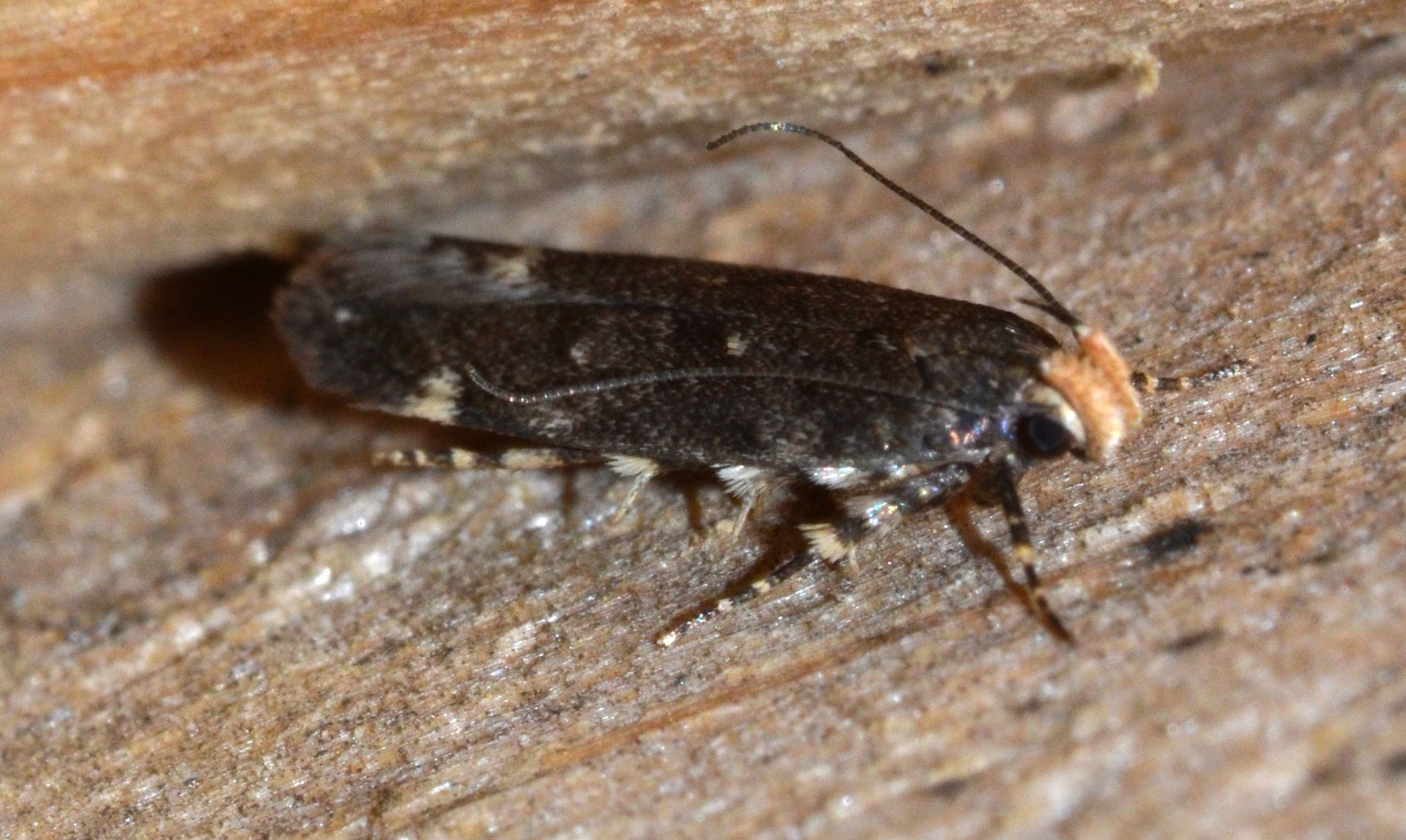
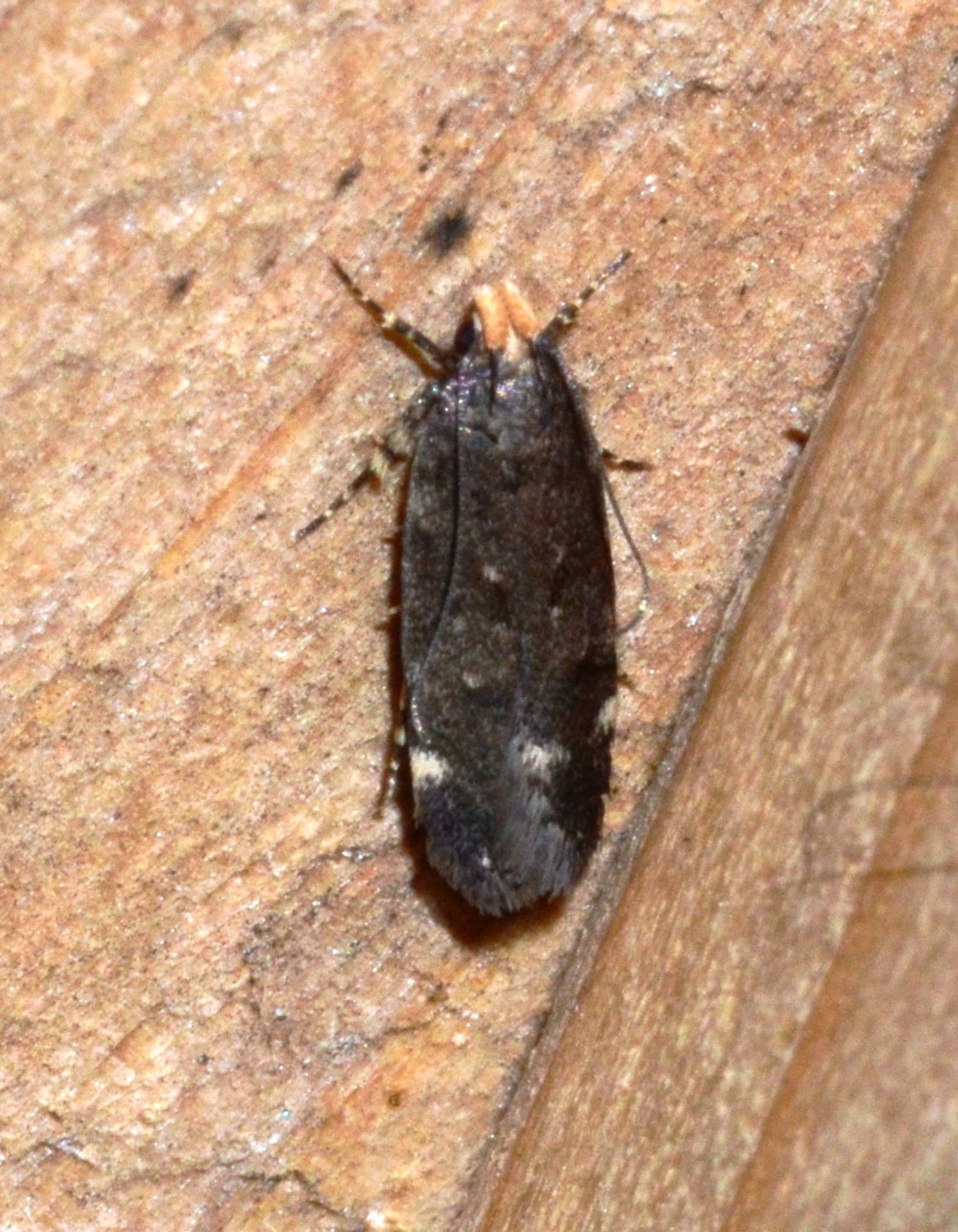
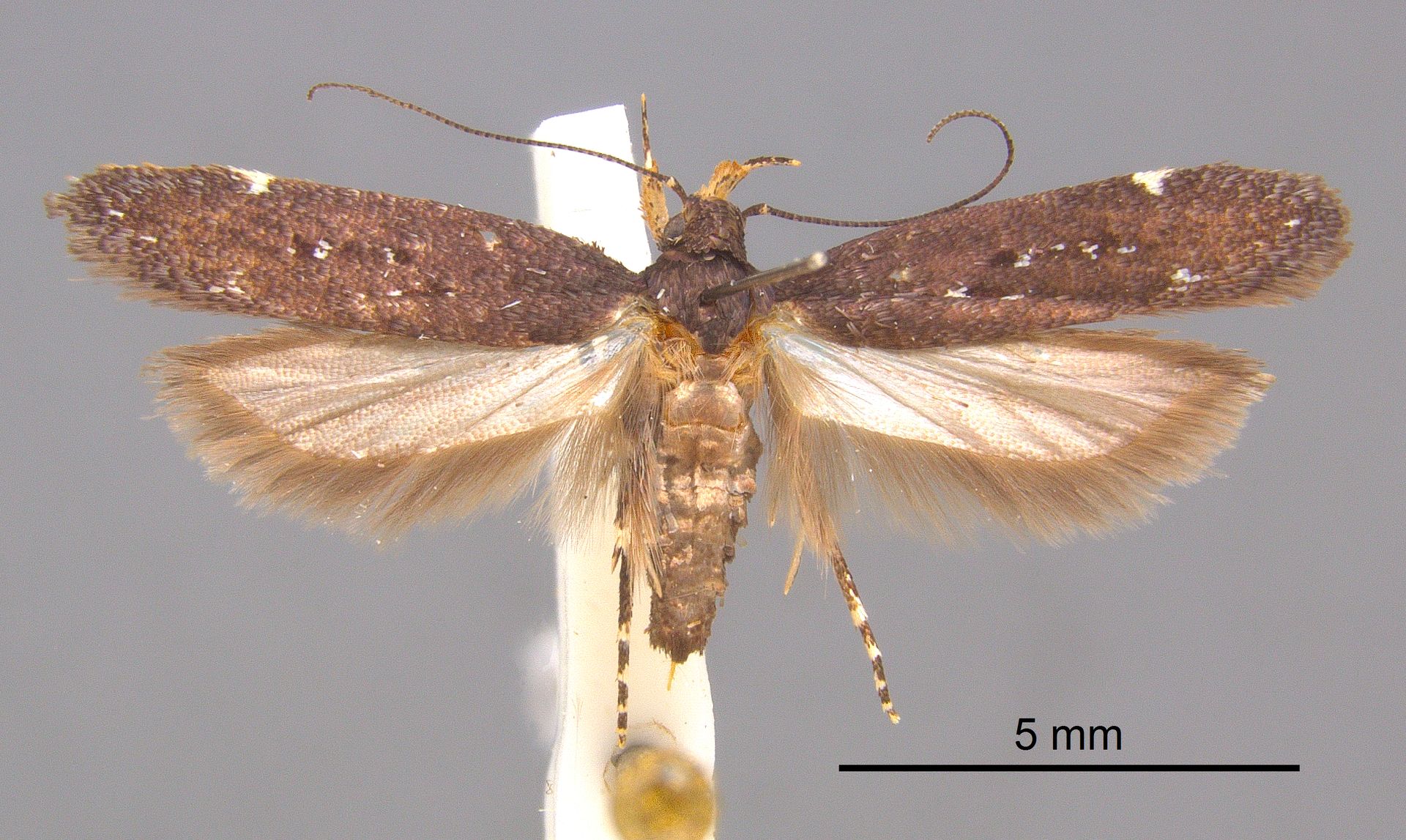
Distinguished from similar small gelechiid moths by the specific pattern of white spotting on dark brown forewings: a small white spot on the fold before the middle, plus white spots at the and dorsally before the cilia. Larvae identifiable by the six darker yellow stripes on a pale yellowish or greenish yellow background and their characteristic leaf-skeletonizing with tube construction.
Images
Habitat
Associated with plants including Comptonia, Epigaea, Myrtus, Quercus ilicifolia, Quercus laevis, Robinia, and Vaccinium ashei. include areas supporting these woody plant , ranging from coastal scrub to oak woodlands and heathlands.
Distribution
United States. Recorded from Maine south to Florida, and west from Illinois to Texas. Also present in California based on distribution records.
Seasonality
primarily active March to October. Records indicate potential year-round activity in some regions.
Diet
Larvae feed on leaves of Comptonia, Epigaea, Myrtus, Quercus ilicifolia, Quercus laevis, Robinia, and Vaccinium ashei. Feeding involves skeletonizing leaves and consuming within fastened leaf shelters.
Host Associations
- Comptonia - larval
- Epigaea - larval
- Myrtus - larval
- Quercus ilicifolia - larval
- Quercus laevis - larval
- Robinia - larval
- Vaccinium ashei - larval
Life Cycle
Larvae reach approximately 8 mm in length. They fasten two or more leaves together and feed within on the , skeletonizing the leaves. With , they form a tube open on both sides. likely occurs within the frass tube or sheltered location, though specific details are not documented.
Behavior
Larvae exhibit shelter-building : fastening multiple leaves together and constructing a tube open at both ends. They feed within this shelter on leaf . are attracted to ultraviolet light sources.
Ecological Role
Herbivore that skeletonizes leaves of various woody plants. The tube construction may provide some protection from and .
Similar Taxa
- Aroga unifasciellaSimilar and size; distinguished by forewing pattern differences
- Other small GelechiidaeMany small gelechiids share dark brown forewings; A. trialbamaculella distinguished by specific white spot pattern on fold, , and margin
More Details
Common name note
The 'red-striped fireworm ' refers to larval coloration, though the moth lacks red stripes. The epithet 'trialbamaculella' refers to three white spots (macules) on the forewings.