
Ornativalva
Gozmány, 1955
Species Guides
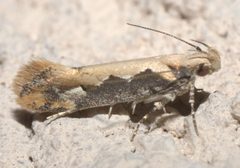
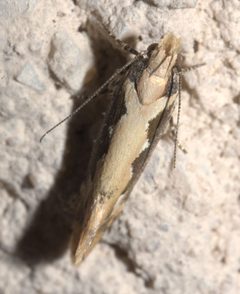
1A of small in the Gelechiidae, containing approximately 50 described arranged into seven species groups. Most species occur in arid and semi-arid regions of the Palearctic, with particular diversity in the Mediterranean, North Africa, Central Asia, and China. Several species have been documented as significant pests of tamarisk shrubs.
Pronunciation
How to pronounce Ornativalva: //ɔːrˈneɪ.tɪˈvæl.və//
These audio files are automatically generated. While they are not always 100% accurate, they are a good starting point.
Identification
Members of this can be distinguished from related gelechiid genera by genitalia , particularly features of the valva and . -level identification requires examination of male genitalia and often female genitalia; external morphology alone is generally insufficient. The genus was revised by Sattler (1967, 1976) who established the current species group system based on genitalia structure.
Images
Habitat
Arid and semi-arid environments, particularly sandy wastelands and salinized lands where tamarisk shrubs occur.
Distribution
Western Europe, Mediterranean region, North Africa, Central Asia, India, and China (Gansu, Inner Mongolia, Ningxia, Qinghai, Shaanxi, Tianjin, Xinjiang). One recorded from the Nearctic region.
Diet
Larvae feed on Tamarix (Tamaricaceae); Ornativalva heluanensis additionally feeds on Frankenia (Frankeniaceae).
Host Associations
- Tamarix - Larval food plantPrimary for most
- Frankenia - Larval food plantSecondary for O. heluanensis
Life Cycle
with larval development on plants.
Behavior
Larvae significantly inhibit growth of Tamarix plants. are attracted to light traps.
Ecological Role
Significant herbivore of Tamarix shrubs in arid ; can cause substantial damage to plant growth.
Human Relevance
Some are considered pests of tamarisk, which is used for erosion control and as an ornamental in arid regions.
Similar Taxa
- Other Gelechiidae generaOrnativalva is distinguished by specific genitalia , particularly valva and structure, requiring dissection for reliable identification.