
Anacampsis lupinella
Busck, 1901
Lupine Leafroller Moth
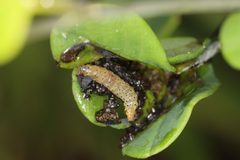
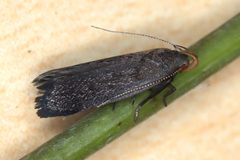
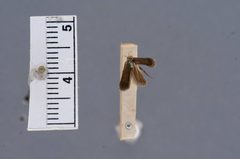
Anacampsis lupinella is a small gelechiid with a wingspan of approximately 14 mm. The exhibits distinctive dark, lustrous forewings with variable pale markings, ranging from unmarked individuals to those bearing whitish-yellow spots or a narrow transverse fascia. Larvae are known to feed on Lupinus perennis. The species occurs in eastern and central North America, with records from Ontario south to Florida and west to Texas.
Pronunciation
How to pronounce Anacampsis lupinella: /ˌænəˈkæmpsɪs ljuːpɪˈnɛlə/
These audio files are automatically generated. While they are not always 100% accurate, they are a good starting point.
Identification
The combination of small size (14 mm wingspan), dark purplish-black forewings with satin lustre, and presence of bluish-white microscales visible under magnification distinguishes this from many . The variable pale forewing markings—when present—provide additional diagnostic characters. The strong purple reflections on the hindwings are notable. Examination of genitalia may be required for definitive separation from similar Anacampsis species.
Images
Habitat
Associated with lupine plants; specific requirements beyond presence of Lupinus perennis are not documented.
Distribution
North America: recorded from Ontario (Canada), Florida, Illinois, Louisiana, and Texas (United States).
Diet
Larvae feed on Lupinus perennis (wild lupine). feeding habits unknown.
Host Associations
- Lupinus perennis - larval food plantsole documented
Similar Taxa
- Other Anacampsis speciesMany share small size, dark coloration, and Gelechiidae characteristics; definitive identification often requires examination of genitalia or plant association.
More Details
Etymology
The specific epithet 'lupinella' derives from the name of its plant, Lupinus, indicating the close larval association with lupines.
Taxonomic history
Described by American entomologist August Busck in 1901, a prominent in North American microlepidoptera.