
Anacampsis lagunculariella
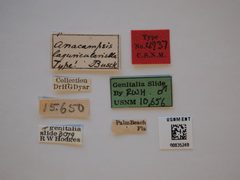
Busck, 1900
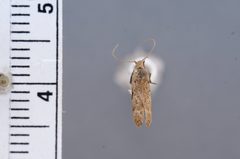
Anacampsis lagunculariella is a small gelechiid described by August Busck in 1900. It occurs in the Caribbean and southeastern United States, with larvae that feed on Laguncularia racemosa, a mangrove . The species exhibits distinctive wing patterning including black costal markings and rows of small black dots near the wing apex.
Pronunciation
How to pronounce Anacampsis lagunculariella: /ˌænəˈkæmpsɪs læˌɡʊŋkjʊˈlæɹiɛlə/
These audio files are automatically generated. While they are not always 100% accurate, they are a good starting point.
Identification
Distinguished from similar Anacampsis by combination of: triangular black costal spot at middle of forewing; rows of 4–6 small black dots in depressed intervals between around apex; yellowish brown ground color with sparse black scaling; and association with Laguncularia racemosa plant. The lagunculariella directly references the host .
Images
Appearance
wingspan 15–16 mm. Forewings yellowish brown with sparse scattered black scales. Extreme base of black. Middle of forewing with triangular black costal spot, sometimes followed by smaller indistinct black scaling at costal third (sometimes absent). Wing with depressed intervals, each containing a row of 4–6 small black dots around apex. Hindwings dark purplish grey.
Habitat
Coastal mangrove where plant Laguncularia racemosa (white mangrove) occurs. Larvae inhabit leaves of host, which they tie together.
Distribution
Panama, Cuba, and southern United States (Florida).
Diet
Larvae feed on Laguncularia racemosa (white mangrove), tying leaves together to form shelters.
Host Associations
- Laguncularia racemosa - larval leaves are tied together by larvae
Life Cycle
Larval stage involves leaf-tying on plant. presumably occurs within tied leaf shelters, though specific details of pupal stage and timing are not documented.
Behavior
Larvae construct shelters by tying leaves of plant together. are presumably , consistent with Gelechiidae.
Ecological Role
Herbivore in mangrove ; specialized consumer of Laguncularia racemosa foliage.
Similar Taxa
- AnacampsisOther in Anacampsis share general gelechiid and wing venation patterns; A. lagunculariella distinguished by specific forewing pattern elements and documented association with Laguncularia racemosa.
More Details
Etymology
Specific epithet lagunculariella derives from plant Laguncularia, indicating early recognition of this specialized host relationship.
Taxonomic history
Described by August Busck in 1900, an American entomologist who made extensive contributions to North American microlepidoptera .