
Machimia tentoriferella
Clemens, 1860
gold-striped leaftier moth
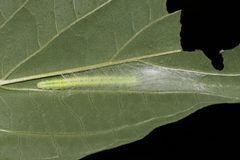
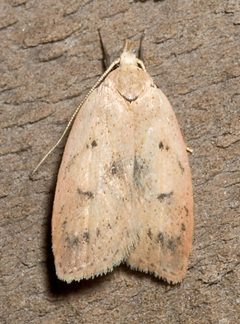
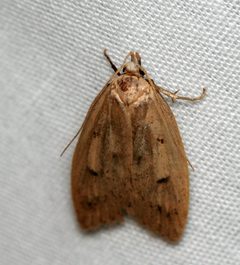
Machimia tentoriferella, commonly known as the gold-striped leaftier , is a small moth in the Depressariidae. Larvae construct distinctive rolled or tied leaf enclosures, a reflected in the name derived from Latin '' meaning 'a tent'. The species is widespread in eastern North America and is associated with multiple hardwood tree .
Pronunciation
How to pronounce Machimia tentoriferella: /məˈkɪmiə ˌtɛntɔrəfɪˈrɛlə/
These audio files are automatically generated. While they are not always 100% accurate, they are a good starting point.
Identification
The 'tentoriferella' and 'gold-striped leaftier ' suggest diagnostic features: gold striping on wings and the larval of tying or rolling leaves into tent-like structures. Distinguishing from likely requires examination of genitalia or detailed wing pattern analysis; specific diagnostic characters for Machimia separation are not documented in available sources.
Images
Appearance
have a wingspan of 20–26 mm. The specific epithet 'gold-striped' refers to characteristic wing patterning, though detailed coloration descriptions are not provided in available sources.
Habitat
Associated with deciduous forests and woodlands containing trees, particularly Fraxinus (ash) . Presence indicated by larval leaf-tying damage on host foliage.
Distribution
Eastern North America: Nova Scotia to North Carolina and Tennessee, west to Mississippi and Iowa, north to Ontario. Records from Vermont confirmed.
Seasonality
fly from September to October; timing varies by location. Larval stage presumably occurs during spring and summer preceding adult .
Diet
Larvae feed on Fraxinus americana (white ash) and Fraxinus nigra (black ash) as primary . Additional recorded food plants include birch (Betula), elm (Ulmus), maple (Acer), oak (Quercus), basswood (Tilia), butternut (Juglans cinerea), cherry (Prunus), beech (Fagus), hickory (Carya), balsam poplar (Populus balsamifera), chestnut (Castanea), hazel (Corylus), apple (Malus), lilac (Syringa), and dogwood (Cornus). The breadth of recorded hosts may reflect opportunistic feeding or misidentifications; Fraxinus are the confirmed primary hosts.
Host Associations
- Fraxinus americana - larval food plantprimary
- Fraxinus nigra - larval food plantprimary
- Betula - larval food plantrecorded, secondary
- Ulmus - larval food plantrecorded, secondary
- Acer - larval food plantrecorded, secondary
- Quercus - larval food plantrecorded, secondary
- Tilia - larval food plantrecorded, secondary
- Juglans cinerea - larval food plantrecorded, secondary
- Prunus - larval food plantrecorded, secondary
- Fagus - larval food plantrecorded, secondary
- Carya - larval food plantrecorded, secondary
- Populus balsamifera - larval food plantrecorded, secondary
- Castanea - larval food plantrecorded, secondary
- Corylus - larval food plantrecorded, secondary
- Malus - larval food plantrecorded, secondary
- Syringa - larval food plantrecorded, secondary
- Cornus - larval food plantrecorded, secondary
Life Cycle
Complete with larval, pupal, and stages. Larvae construct rolled or tied leaf enclosures for shelter and feeding. presumably occurs within these leaf structures or in leaf litter, though specific details are not documented. Adults emerge in autumn.
Behavior
Larvae are leaf-tiers, rolling or tying leaves together to form tent-like shelters in which they feed and develop. This is the source of both the and the specific epitymology.
Ecological Role
Herbivore; larvae function as folivores on hardwood trees, potentially contributing to nutrient cycling through leaf damage and serving as prey for and .
Human Relevance
Not known to be of significant economic importance. The broad range includes some ornamental and timber , but damage levels are not documented as severe. May be of interest to lepidopterists and naturalists due to distinctive larval .
Similar Taxa
- Other Machimia species likely share similar size, , and leaftier larval ; specific identification requires detailed morphological examination
- Other Depressariidae leaf-tying larvaeMultiple contain leaf-tier with convergent larval ; association and help distinguish
More Details
Nomenclatural note
placement varies between sources: Depressariidae (Wikipedia, Catalogue of Life, NCBI) versus Peleopodidae (GBIF). Depressariidae is the preferred modern classification.
Host record reliability
The extensive list of recorded food plants beyond Fraxinus may include opportunistic feeding, laboratory acceptances, or historical misidentifications; Fraxinus americana and F. nigra are the confirmed primary .