
Anatrachyntis badia
(Hodges, 1962)
Florida Pink Scavenger
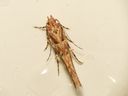
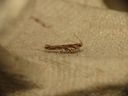
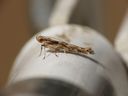
A small scavenger with a 9–10 mm wingspan, native to the southern United States and introduced to Europe and Hawaii. Larvae feed on decaying plant material, dried fruit, and , occasionally causing superficial damage to citrus rinds. First described by Ronald W. Hodges in 1962.
Pronunciation
How to pronounce Anatrachyntis badia: //ˌænətrəˈkɪntɪs ˈbeɪdiə//
These audio files are automatically generated. While they are not always 100% accurate, they are a good starting point.
Identification
Distinguished from similar small Cosmopterigidae by its scavenger lifestyle and association with decaying fruit and plant debris rather than living plant tissue. The specific epithet 'badia' (Latin for brown) may refer to coloration, but diagnostic characters require examination. In Europe, its presence indicates accidental importation rather than native occurrence.
Images
Habitat
Found in environments with abundant decaying plant material: fruit orchards, areas with fallen or drying fruit, and tropical greenhouses. In Germany, established in a zoological garden tropical greenhouse on bamboo infested with . Associated with fruit clusters, under sepals, and areas where develops.
Distribution
Native to southern United States (Florida to California, north to Maryland). Introduced to Europe: recorded from Italy, Greece, Spain, Malta, United Kingdom, Poland, and Turkey via accidental importation in pomegranates; Germany (2011, tropical greenhouse). Also recorded from Hawaii.
Seasonality
Larvae active during summer when they may feed on ripe orange rinds. not specified in sources.
Diet
Larvae are scavengers: dry or decaying fruit, dead floral parts, , cones of Pinus , Cassia pods, dead peach and loquat fruits, lime, grapefruit, banana, cabbage, coconut blossoms, and elm leaves. Summer larvae may nibble ripe orange rind superficially without causing appreciable damage.
Host Associations
- Pinus - larval foodcones
- Cassia - larval foodpods
- Prunus persica - larval fooddead fruits
- Eriobotrya japonica - larval fooddead fruits (loquat)
- Citrus × aurantiifolia - larval foodlime
- Citrus × paradisi - larval foodgrapefruit
- Musa - larval foodbanana
- Brassica oleracea - larval foodcabbage
- Cocos nucifera - larval foodblossoms
- Ulmus - larval foodleaves
- Palmicultor lumpurensis - associatedmealybug colonies on bamboo in German greenhouse record
Life Cycle
Complete with , larva, pupa, and stages. Larvae are the primary feeding stage and have been observed living in colonies. Specific details on egg placement, sites, and time are not documented.
Behavior
Larvae are scavengers that feed in fruit clusters and under sepals where decaying material accumulates. In Germany, larvae were found living in colonies of the mealybug Palmicultor lumpurensis on bamboo, suggesting opportunistic use of microhabitats with accumulated organic matter. Feeding on ripe citrus is superficial and non-destructive.
Ecological Role
Decomposer and scavenger, contributing to breakdown of dead plant material. Association with suggests role in nutrient cycling in fruit cluster microenvironments.
Human Relevance
Minor economic significance: larvae occasionally cause superficial damage to ripe oranges but this is not considered appreciable damage. Accidental introduction to Europe via imported pomegranates demonstrates potential for international transport in fruit shipments. Presence in tropical greenhouses indicates potential as greenhouse pest of minor concern.
Similar Taxa
- Other Anatrachyntis speciesSimilar small size and characteristics; distinguished by specific scavenger habits and associations where known.
- Cosmopterigidae with leaf-mining or boring larvaeA. badia differs in scavenger rather than feeding on living plant tissue.
More Details
Nomenclatural note
Originally described as Sathrobrota badia Hodges, 1962; transferred to Anatrachyntis. Listed on BugGuide as Pyroderces badia, reflecting historical placement.
European establishment
Not established in the wild in Europe; all records represent accidental importation with fruit, primarily pomegranates. The 2011 German record from a tropical greenhouse represents the only known breeding in Europe, associated with mealybug colonies rather than fruit.