Walshia elegans
Hodges, 1978
Walshia elegans is a small in the Cosmopterigidae, described by Ronald W. Hodges in 1978. It has been recorded from five states in the southeastern and central United States. are active during summer and early autumn. The wingspan measures approximately 12 mm.
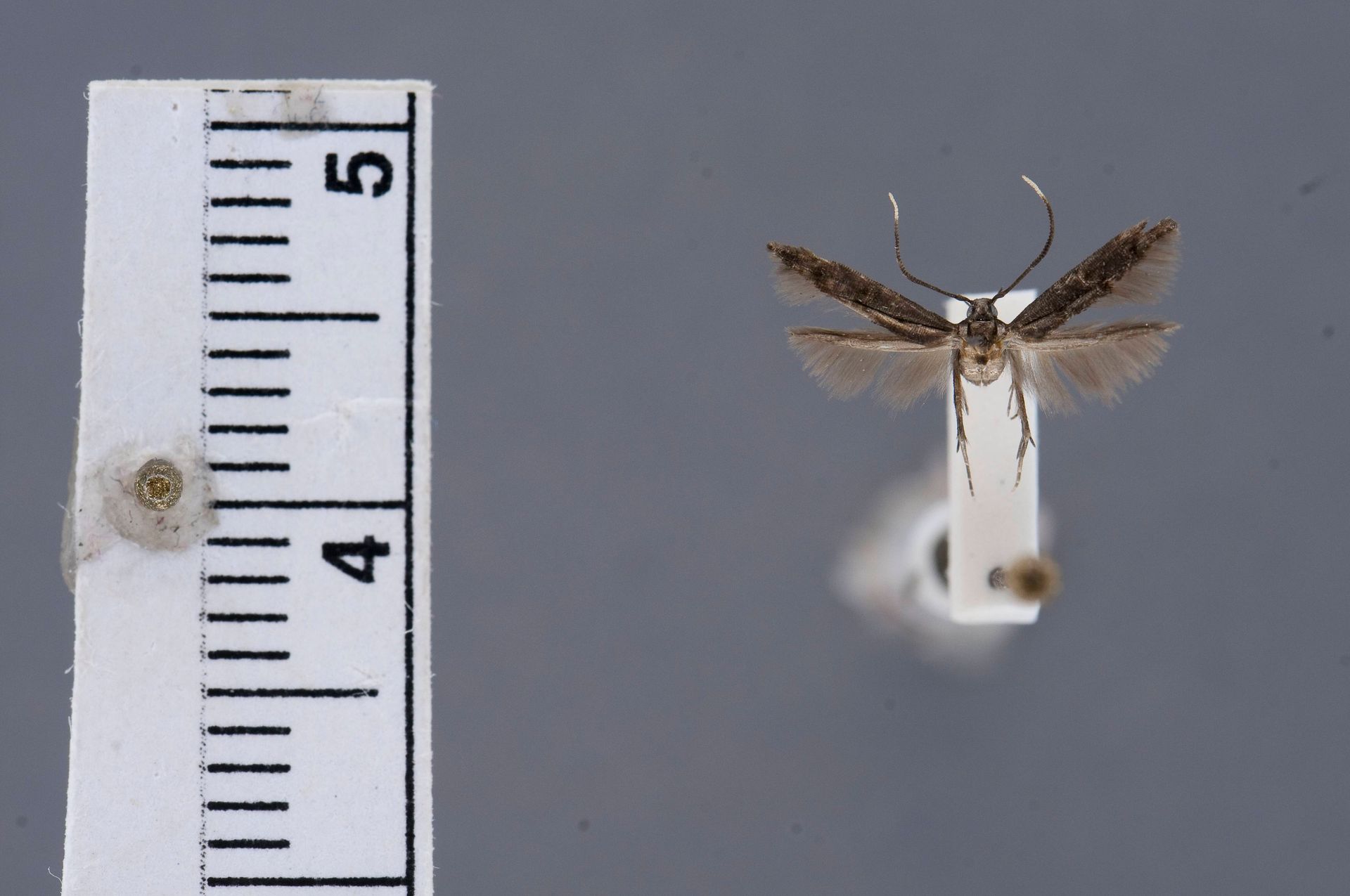
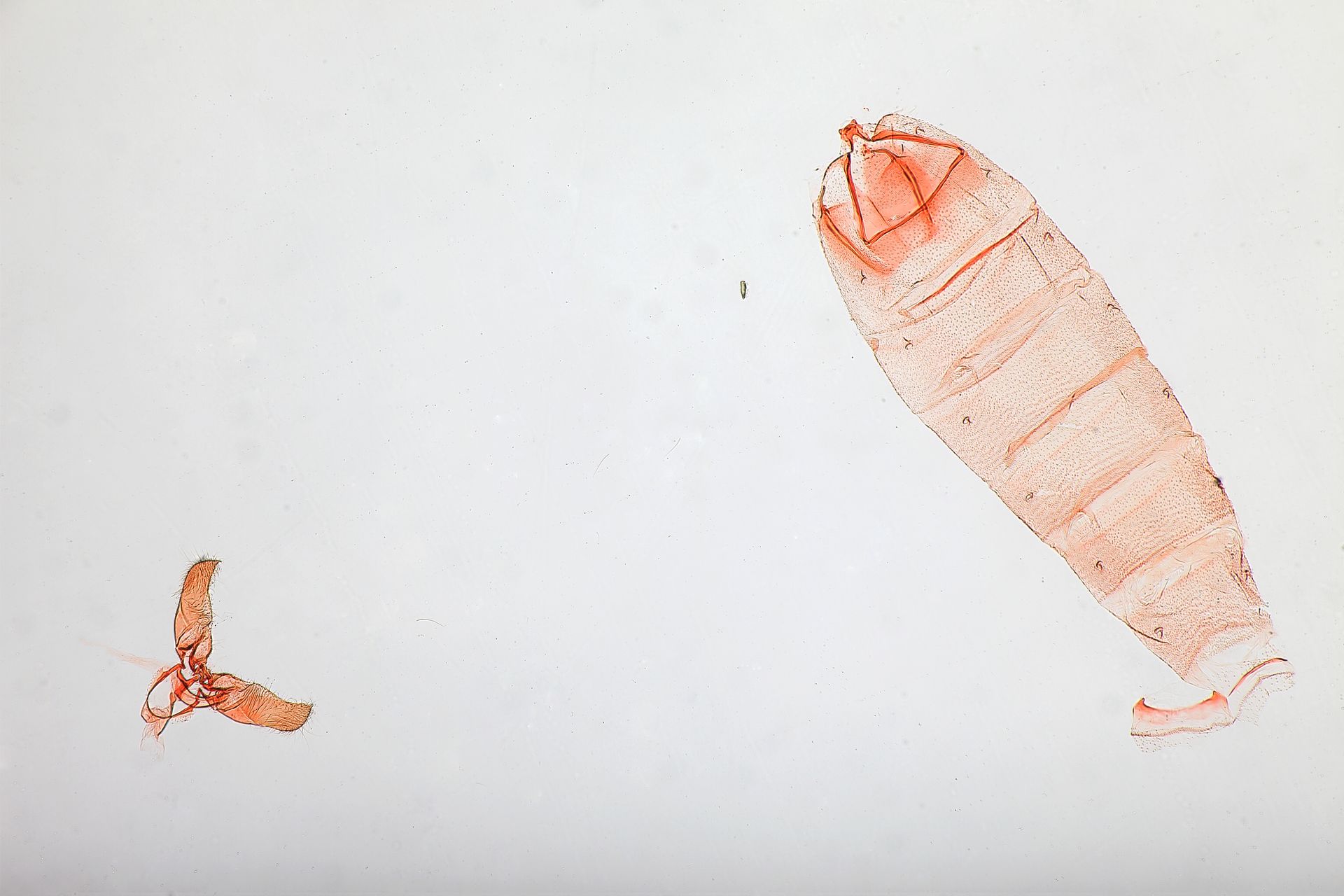
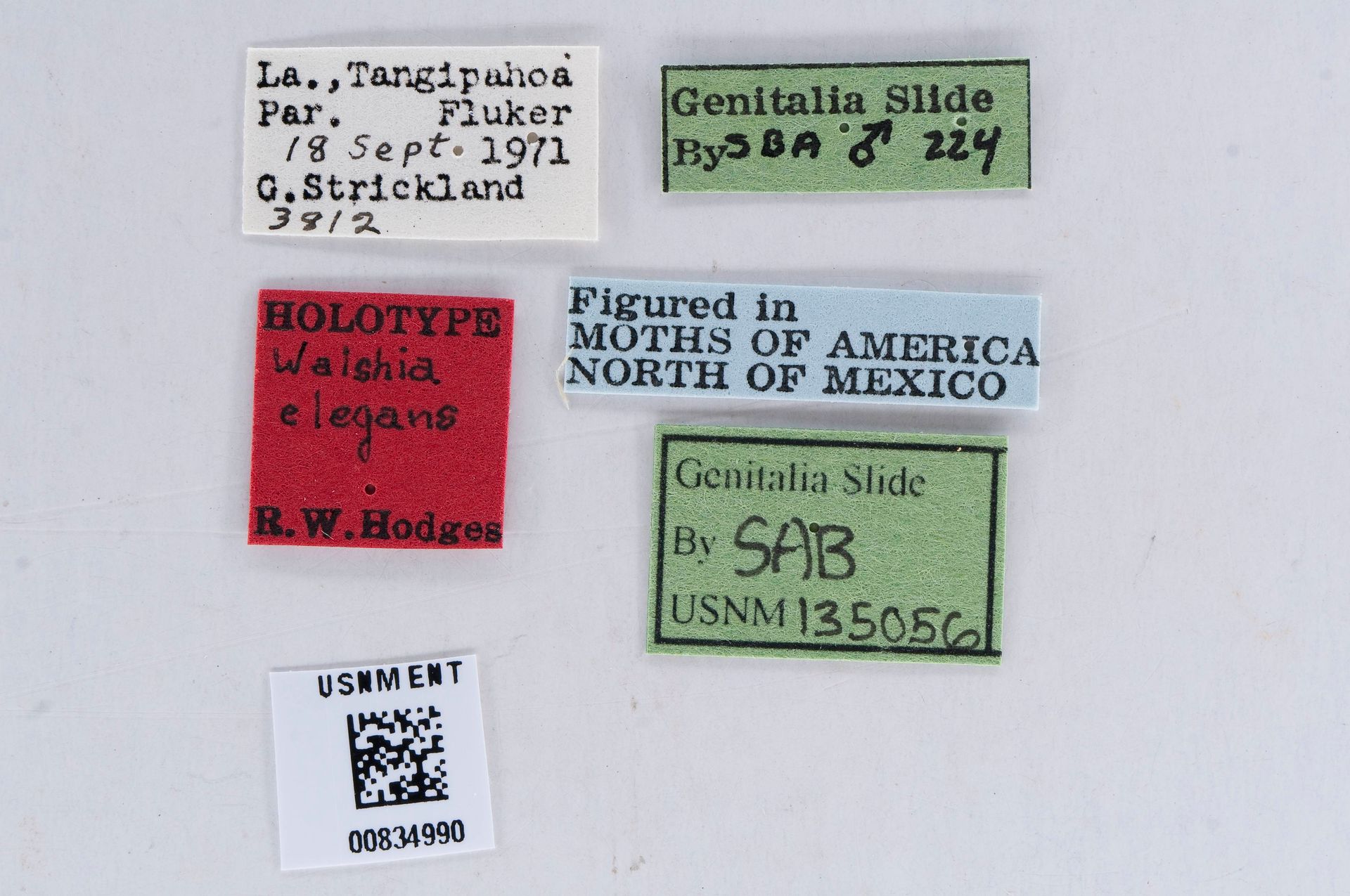
Pronunciation
How to pronounce Walshia elegans: //ˈwɔːlʃiə ˈɛləˌɡænz//
These audio files are automatically generated. While they are not always 100% accurate, they are a good starting point.
Identification
This can be distinguished by its small size (12 mm wingspan) and geographic distribution. Within the Walshia, identification to species level requires examination of genitalia or reference to original taxonomic description by Hodges (1978). The genus Walshia belongs to the Cosmopterigidae, which are generally small with narrow wings.
Images
Appearance
have a wingspan of about 12 mm. Specific coloration and pattern details are not documented in available sources.
Distribution
Recorded from Florida, Louisiana, Arkansas, Iowa, and West Virginia in the United States. The appears to have a disjunct distribution across the southeastern and central United States.
Seasonality
have been observed on wing from June to October.
Similar Taxa
- Other Walshia speciesCongeneric within Walshia share similar small size and narrow-winged ; accurate identification requires examination of genitalia or reference to original species descriptions.
- Other Cosmopterigidae members are generally small with narrow wings; many lack distinctive external markings and require dissection for identification.
Sources and further reading
- BugGuide
- Wikipedia
- GBIF taxonomy match
- iNaturalist taxon
- Catalogue of Life
- Bring on the Tourists! | Bug Squad
- More Nematodes in Outer Space? | Bug Squad
- Showcasing Animal and Plant Parasitic Nematodes | Bug Squad
- Don't Miss the Nematode Collection at UC Davis Biodiversity Museum Day Feb. 10 | Bug Squad
- UC Davis Speaker: Fatma Kaplan, A Go-Getter and Maybe a Genius | Bug Squad
- Bug Eric: Wasp Wednesday: Steniolia elegans