
Siskiwitia alticolans
Hodges, 1969
A small in the Cosmopterigidae, described by Ronald W. Hodges in 1969. Known from a limited number of records in Arizona and Texas. are active in mid-summer and are characterized by distinctive black forewings with a white transverse band.
Pronunciation
How to pronounce Siskiwitia alticolans: //ˌsɪsˈkwiːʃiə ælˈtɪkəlænz//
These audio files are automatically generated. While they are not always 100% accurate, they are a good starting point.
Identification
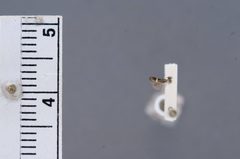
The combination of extremely small size (6 mm wingspan), black forewings with a single white transverse band at two-thirds length, and shining dark gray hindwings distinguishes this from similar small cosmet moths. The specific placement and width of the white band may help separate it from , though direct comparison with other Siskiwitia species requires reference specimens.
Images
Distribution
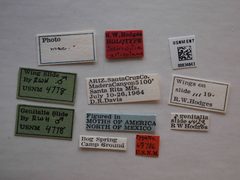
Recorded from Arizona and Texas in southwestern North America. Specific associations within these states are not documented.
Seasonality
have been recorded on wing in July and August.
Similar Taxa
- Other Siskiwitia speciesCongeneric share small size and general cosmet ; precise identification requires examination of wing pattern details, particularly the placement and form of pale markings on dark forewings
- Other Chrysopeleiinae members are similarly small with varied wing patterns; the specific combination of black ground color with single white transverse band is diagnostic for this within the region
More Details
Etymology
The specific epithet 'alticolans' suggests a high-elevation association, though this has not been explicitly documented in the source material.
Taxonomic history
Described by lepidopterist Ronald W. Hodges in 1969, a in North American microlepidoptera. The remains poorly known with only 3 observations recorded in iNaturalist as of the data cutoff.