Periploca atrata
Hodges, 1962
juniper cone moth
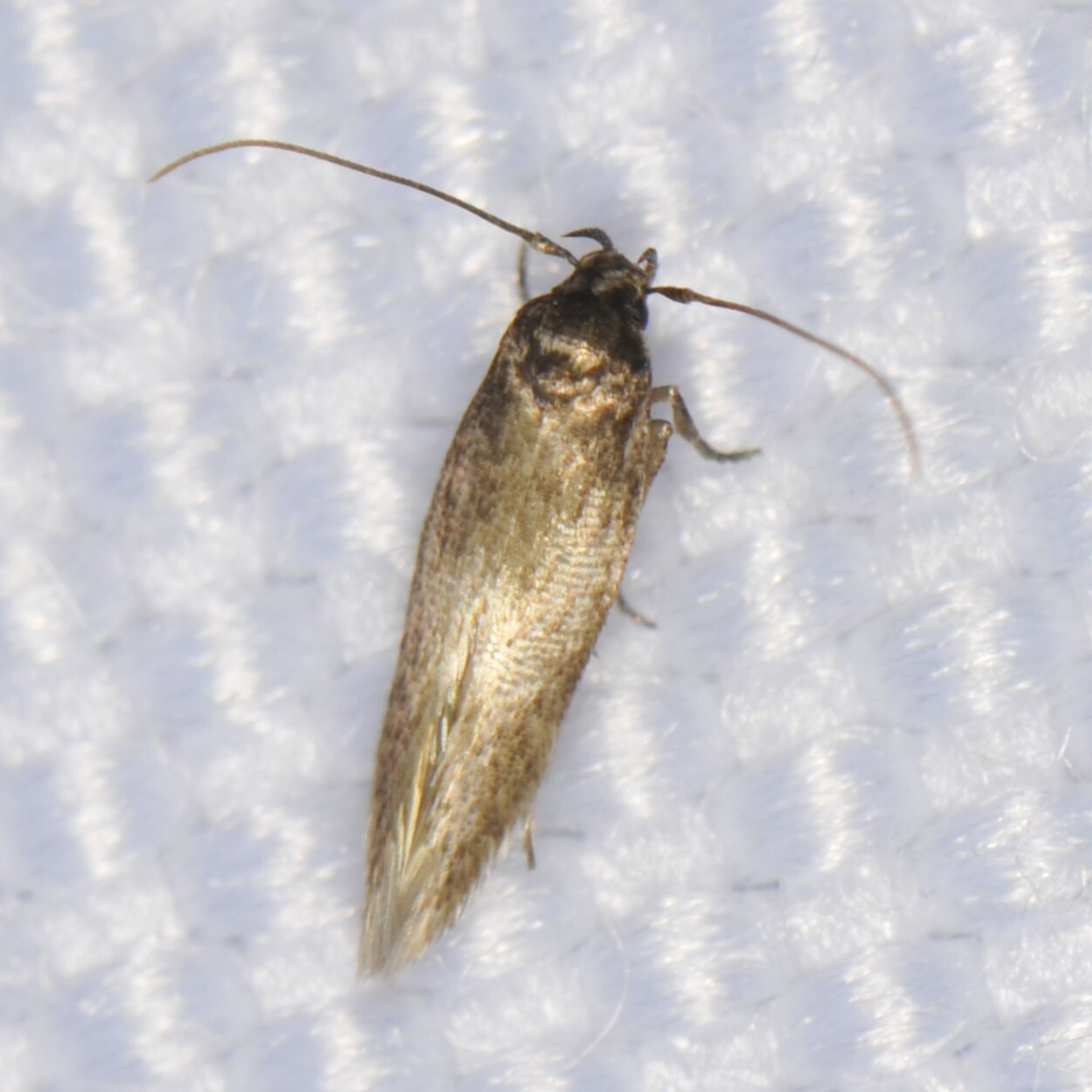
Periploca atrata, commonly known as the juniper cone , is a small moth in the Cosmopterigidae described by Ronald W. Hodges in 1962. It is restricted to the southwestern United States, with confirmed records from Arizona and California. The is notable for its specialized larval diet on juniper berries.
Pronunciation
How to pronounce Periploca atrata: /ˌpɛrɪˈploʊkə əˈtrɑːtə/
These audio files are automatically generated. While they are not always 100% accurate, they are a good starting point.
Images
Habitat
Associated with juniper woodlands and scrublands where plants occur.
Distribution
Southwestern United States: recorded from Arizona and California.
Seasonality
have been recorded on wing from April to May and from July to August.
Diet
Larvae feed on the berries (cones) of Juniperus californica and Juniperus deppeana.
Host Associations
- Juniperus californica - larval food plantberries
- Juniperus deppeana - larval food plantberries
More Details
Etymology
The specific epithet 'atrata' derives from Latin, meaning 'clothed in black' or 'blackened', likely referring to the coloration.
Taxonomic History
Described by Ronald W. Hodges in 1962. Placed in Chrysopeleiinae within Cosmopterigidae.
Sources and further reading
- BugGuide
- Wikipedia
- GBIF taxonomy match
- iNaturalist taxon
- Catalogue of Life
- What a Wasp! What a Tattoo! | Bug Squad
- Multiple Megarhyssa males | Beetles In The Bush
- Bug Eric: A Potential New Host Record for Calliephialtes grapholithae (Hymenoptera: Ichneumonidae) from a Paper Wasp nest (Hymenoptera: Vespidae: Polistes metricus)