
Coleophora persimplexella
McDunnough, 1955
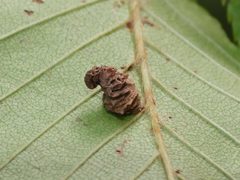
Coleophora persimplexella is a case-bearing in the Coleophoridae, described by James Halliday McDunnough in 1955. The is known only from Canada, with confirmed records in Nova Scotia. Larvae construct portable lobe cases and feed on leaves of woody plants in the Comptonia, Betula, and Alnus.
Pronunciation
How to pronounce Coleophora persimplexella: /kəˌliːəˈfɔːrə pɜːrˌsɪmplɪksˈɛlə/
These audio files are automatically generated. While they are not always 100% accurate, they are a good starting point.
Identification
can be distinguished from other Coleophora by genitalia examination; external is generally insufficient for reliable identification within this . The larval lobe case is a key identifying feature, though case shape alone does not distinguish this species from all . Confirmed identification requires reference to the original description and comparison with .
Images
Habitat
Associated with supporting plants: Comptonia (sweetfern) occurs in dry sandy or rocky soils, often in pine barrens or forest openings; Betula (birch) and Alnus (alder) are found in varied moist to wet woodland and riparian settings.
Distribution
Canada: Nova Scotia (confirmed). Additional Canadian provinces may be within range but lack published records.
Diet
Larvae feed on leaves of Comptonia peregrina (sweetfern), Betula (birch), and Alnus species (alder).
Host Associations
- Comptonia peregrina - larval sweetfern
- Betula - larval birch
- Alnus - larval alder
Life Cycle
Larvae construct and inhabit a portable lobe case, a characteristic structure of the Coleophora. Case construction and specific larval instar details for this have not been documented.
Behavior
Larvae create and carry lobe cases for protection while feeding on plant leaves. Case-bearing is typical of the Coleophoridae.
Ecological Role
Herbivore on woody deciduous and semi-deciduous plants; specific functions have not been studied.
Similar Taxa
- Other Coleophora speciesExternal of is highly similar across the ; genitalia dissection is required for definitive identification. Larval cases vary in shape and association provides the best field clue.
More Details
Taxonomic history
Described by Canadian entomologist James Halliday McDunnough in 1955. The specific epithet 'persimplexella' suggests a comparison to C. simplexella, though the nature of this relationship requires examination of the original description.
Data limitations
The is represented by only 19 iNaturalist observations and minimal published literature. Most biological details remain undocumented.