
Coleophora monardella
(McDunnough, 1933)
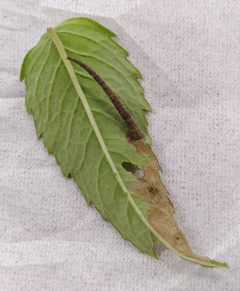
Coleophora monardella is a case-bearing in the Coleophoridae, first described by James Halliday McDunnough in 1933. The is known from limited records in North America, specifically Iowa and Ontario. Its larvae are specialized feeders on Monarda species, particularly Monarda fistulosa, and construct distinctive annulate (ringed) larval cases. The species epithet reflects its association with Monarda plants.
Pronunciation
How to pronounce Coleophora monardella: /ˌkoʊ.liˈɒf.ə.rə ˌmɒn.ərˈdɛl.ə/
These audio files are automatically generated. While they are not always 100% accurate, they are a good starting point.
Identification
May be distinguished from other Coleophora by larval case (annulate construction) and confirmed association with Monarda plants. require dissection or genitalia examination for definitive identification within the .
Images
Habitat
Associated with supporting Monarda fistulosa and related Monarda , which typically include prairies, meadows, and open woodlands in eastern and central North America.
Distribution
Known from Iowa (United States) and Ontario (Canada).
Diet
Larvae feed on leaves of Monarda , specifically including Monarda fistulosa.
Host Associations
- Monarda fistulosa - larval food plantleaves
- Monarda - larval food plant-level association
Life Cycle
Larvae create an annulate (ringed) case, a characteristic structure for concealment and protection during feeding.
Ecological Role
Herbivore; larval feeding on Monarda may influence plant , though specific ecological impacts have not been documented.
Similar Taxa
- Other Coleophora speciesMany Coleophora are morphologically similar and require genitalia dissection for identification; plant association with Monarda may help distinguish C. monardella in the field.
More Details
Taxonomic history
Originally described as Haploptilia monardella by McDunnough in 1933, later transferred to Coleophora.