
Coleophora elaeagnisella
Kearfott, 1908
Speckled Casebearer Moth
A small casebearer moth ( Coleophoridae) known for its distinctive larval case and specialized feeding on Elaeagnaceae plants. The is restricted to northern North America, where it has been documented from the Great Lakes region northward into Canada. Larvae construct pistol-shaped portable cases from silk and plant material.
Pronunciation
How to pronounce Coleophora elaeagnisella: //kəˌliːəˈfɔːrə ˌɛliːæɡˈnaɪsɛlə//
These audio files are automatically generated. While they are not always 100% accurate, they are a good starting point.
Identification
Larvae are distinguished by their pistol-shaped cases, a characteristic form among Coleophora . are small typical of the Coleophoridae; specific diagnostic features for field identification of adults are not well documented in available sources.
Images
Habitat
Associated with plants in the Elaeagnaceae, which include shrubs and small trees of Elaeagnus, Hippophae, and Shepherdia. These hosts typically occur in open, often disturbed including riparian areas, dunes, and old fields.
Distribution
North America, specifically from the Great Lakes region northward. Documented from Michigan and Ontario in the east, and from Alberta and Manitoba in western Canada.
Diet
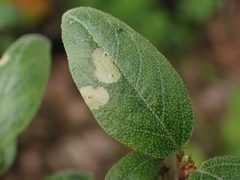
Larvae feed on leaves of Elaeagnus, Hippophae, and Shepherdia ( Elaeagnaceae).
Host Associations
- Elaeagnus - larval food plant
- Hippophae - larval food plant
- Shepherdia - larval food plant
Life Cycle
Larvae construct portable cases from silk and plant material, carrying them while feeding. The pistol-shaped case form is characteristic of this . occurs within the case. Details of timing and number of per year are not documented in available sources.
Behavior
Larvae are case-bearers, constructing and transporting silk cases throughout their feeding period. The case serves as both shelter and site.
Ecological Role
Herbivore specialized on Elaeagnaceae; contributes to leaf herbivory on its shrubs. Potential role in nutrient cycling through leaf damage, though specific ecological impacts have not been quantified.
Human Relevance
No documented economic or cultural significance. The plants include used in landscaping (Elaeagnus) and those with historical food or medicinal uses (Shepherdia, Hippophae), but the is not known to cause significant damage.
Similar Taxa
- Other Coleophora speciesMany construct similar larval cases; C. elaeagnisella is distinguished by plant association (Elaeagnaceae) and the pistol-shaped case form, though case shape alone may not be diagnostic without host confirmation.