Coleophora borea
Braun, 1921
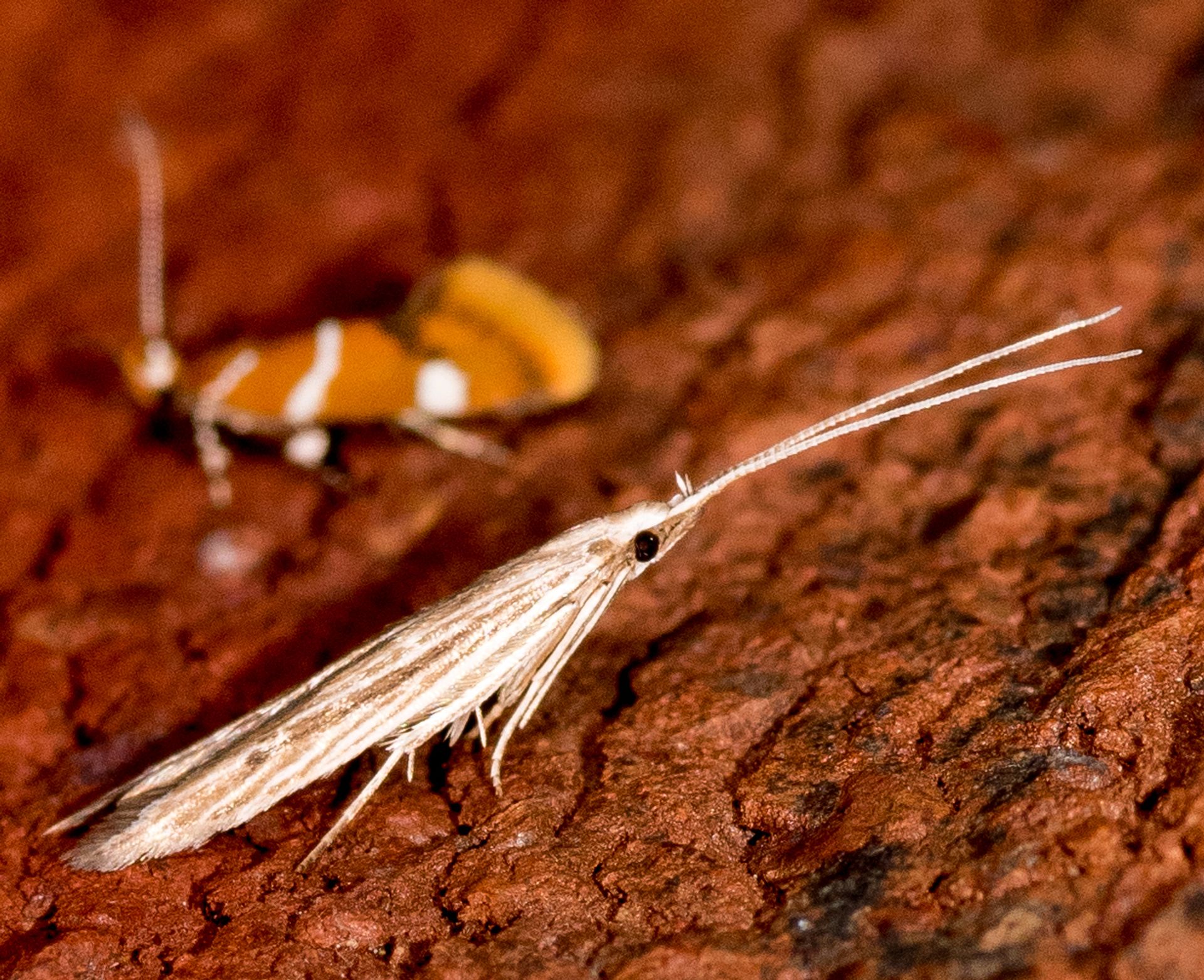
Coleophora borea is a small in the Coleophoridae, described by Braun in 1921. It occurs in the United States, with confirmed records from Ohio. The larvae are seed-feeders specializing on Fallopia scandens, and construct distinctive trivalved tubular silken cases for protection.
Pronunciation
How to pronounce Coleophora borea: /kəˈliː.əˌfoʊ.rə ˈbɔːr.i.ə/
These audio files are automatically generated. While they are not always 100% accurate, they are a good starting point.
Identification
Larvae can be recognized by their trivalved, tubular silken case—an architectural trait characteristic of many Coleophora . are small typical of the Coleophoridae; specific diagnostic features distinguishing C. borea from require examination of genitalia or other minute morphological characters.
Images
Habitat
Associated with plant Fallopia scandens, suggesting where this climbing or trailing vine occurs, such as open woodlands, forest edges, and disturbed areas.
Distribution
United States, including Ohio. Specific range boundaries are poorly documented.
Diet
Larvae feed on seeds of Fallopia scandens (climbing false buckwheat). feeding habits are unknown.
Host Associations
- Fallopia scandens - larval food plantseeds
Life Cycle
Larvae construct a trivalved, tubular silken case. Details of , pupal, and stages are not documented.
Behavior
Larvae create and inhabit a protective silken case while feeding on seeds. Case construction is three-valved and tubular in form.
Ecological Role
Seed on Fallopia scandens. Role in dynamics and function is unstudied.
Human Relevance
No known economic importance or direct interactions with humans.
Similar Taxa
- Other Coleophora speciesMany share similar larval case architecture and small size; precise identification requires specialized examination.
More Details
Taxonomic note
Described by Annette Frances Braun in 1921, a prolific American lepidopterist who described hundreds of microlepidoptera .
Sources and further reading
- BugGuide
- Wikipedia
- GBIF taxonomy match
- iNaturalist taxon
- NCBI Taxonomy
- Catalogue of Life
- Bugs for All, All for Bugs | Bug Squad
- Zombie bees, Apis mellifera, and their tormentor the humpbacked fly, Apocephalus borealis — Bug of the Week
- Did One Praying Mantis Give Rise to an All-Female Species?
- Back-Seat Driver: The Parasite That Makes Bees Drop Off Its Babies
- Where Siberian orchids thrive: new hotspot of orchids discovered near Novosibirsk | Blog
- Monitoring Ecological Change with Northern Beetles