
Osminia
Le Cerf, 1917
Species Guides
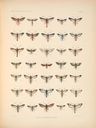
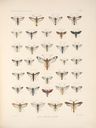
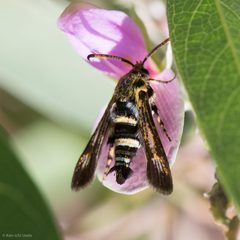
3Osminia is a of clearwing moths in the Sesiidae, established by Le Cerf in 1917. The genus comprises 14 described distributed across multiple continents including North America, Africa, and Asia. Species in this genus belong to the tribe Osminiini. The genus includes both relatively recently described species (several named by Duckworth & Eichlin in 1983 and Eichlin in 1998) and older descriptions dating to the 19th century.
Pronunciation
How to pronounce Osminia: /ɒsˈmɪniə/
These audio files are automatically generated. While they are not always 100% accurate, they are a good starting point.
Images
Distribution
of Osminia have been recorded from North America (including Mexico), Namibia, and regions of Asia (including Japan and Russia). The shows a disjunct distribution pattern with representatives in the Nearctic, Afrotropical, and Palearctic regions.
More Details
Taxonomic history
The was established by Le Cerf in 1917 with Osminia ferruginea as the type . Significant revisionary work was conducted by Duckworth and Eichlin in 1983, who described four new species from North America, and by Eichlin in 1987 and 1998. The most recently described species, Osminia namibiana, was named by Kallies in 2004 from Namibia, representing the first African record for the genus.
Species diversity
The contains 14 recognized : O. donahueorum, O. ruficornis, O. albipilosa, O. bicornicolis, O. colimaensis, O. exigua, O. fenusaeformis, O. ferruginea, O. fisheri, O. heitzmani, O. phalarocera, O. rubrialvus, O. namibiana, and O. gorodinskii.