
Melittiini
Le Cerf, 1917
Genus Guides
1Melittiini is a tribe of clearwing moths within the Sesiidae, characterized by -mimicking appearance and activity. Members exhibit reduced wing scaling that creates transparent areas, a trait shared with other sesiids. The tribe was established by Le Cerf in 1917 and contains multiple distributed across the Northern Hemisphere.
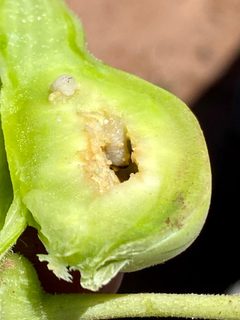
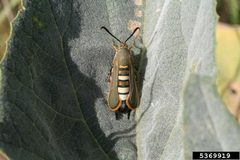
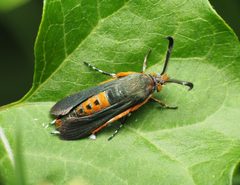
Pronunciation
How to pronounce Melittiini: /mɛˌlɪtiˈini/
These audio files are automatically generated. While they are not always 100% accurate, they are a good starting point.
Identification
Distinguished from other Sesiidae tribes by combinations of wing venation patterns, genitalic structures (particularly in males), and specific arrangements of transparent wing areas. Melittiini typically show more extensive wing transparency than some related tribes. -level identification requires examination of structure, wing pattern details, and male genitalia. Separated from by presence of on wing borders, two pairs of wings (vs. one pair in Hymenoptera), and resting posture with wings folded tent-like or flat rather than folded longitudinally.
Images
Habitat
Associated with diverse environments including woodlands, forest edges, meadows, and riparian corridors. Larval vary by but frequently involve roots, stems, or trunks of woody plants. often found in sunny clearings or along forest margins where plants occur.
Distribution
Primarily distributed across the Palearctic region with extensions into the Nearctic. Recorded from Europe through Asia to Japan and North America. Specific ranges vary considerably among constituent .
Seasonality
activity generally occurs during warmer months, with peak periods varying by latitude and . Many species fly during daylight hours, with activity concentrated in morning and afternoon. Some species show extended flight periods while others have more restricted seasonal .
Life Cycle
Complete with four stages: , larva, pupa, . Larvae are internal feeders, typically boring into roots, stems, or trunks of plants. Developmental duration varies; some may require multiple years to complete a . occurs within the larval tunnel or in soil.
Behavior
are and active during daylight, often visiting flowers for nectar. Strong mimicry involves rapid, erratic patterns and body positioning that enhances hymenopteran resemblance. Some exhibit territorial or mate-location flights near plants.
Ecological Role
Larvae function as stem and root borers, contributing to nutrient cycling in woody vegetation and creating for other organisms in galleries. serve as when visiting flowers. mimicry provides protection from vertebrate .
Human Relevance
Some are minor pests of fruit trees, vines, or ornamental plants when larval boring causes economic damage. Otherwise generally harmless; mimicry often causes unnecessary alarm. Occasionally studied for potential against plants.
Similar Taxa
- SynanthedoniniAnother tribe of Sesiidae with clearwing moths; distinguished by different wing venation patterns and male genitalic structure, particularly in valvae and .
- TinthiiniSesiid tribe with generally smaller body size and different wing transparency patterns; often associated with herbaceous rather than woody .
- Hymenoptera (wasps)Convergent mimics with similar coloration and ; separated by remnants on wings, wing coupling mechanisms, and structure.
More Details
Taxonomic History
The tribe has undergone significant revision, with moved between tribes as phylogenetic relationships have been clarified through morphological and molecular studies.
Mimicry
The mimicry in Melittiini represents Müllerian or complexes involving multiple hymenopteran models; effectiveness varies by geographic region and local wasp fauna.