
Bondia comonana
(Kearfott, 1907)
prune limb borer
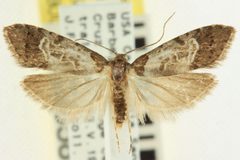
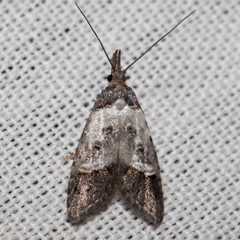
Bondia comonana, known as the prune limb borer, is a small in the Carposinidae. It was described by William D. Kearfott in 1907. The occurs across western and northern North America, from the Pacific coast to the Atlantic. Its larvae are known to bore into the limbs of Prunus and Quercus species.
Pronunciation
How to pronounce Bondia comonana: /ˈbɒndiə ˌkoʊməˈnænə/
These audio files are automatically generated. While they are not always 100% accurate, they are a good starting point.
Identification
Small size (wingspan under 20 mm) distinguishes it from larger Carposinidae. Association with Prunus and Quercus limb boring may aid identification of larvae. Specific diagnostic features for separating it from are not documented.
Images
Appearance
Small with wingspan of 14–19 mm in males and 13–18 mm in females. Specific coloration and pattern details are not documented in available sources.
Habitat
Associated with trees in the Prunus and Quercus; specific requirements beyond host presence are not documented.
Distribution
North America: recorded from Washington, Colorado, Arizona, and California in the United States; across southern Canada to Maine. GBIF records confirm presence in Alberta, Manitoba, and Saskatchewan in Canada, and Vermont in the United States.
Diet
Larvae bore into and feed within the limbs of Prunus and Quercus .
Host Associations
- Prunus - larval larvae bore into limbs
- Quercus - larval larvae bore into limbs
Life Cycle
Larval stage bores into tree limbs. Complete details, including number of per year and stage, are not documented.
Behavior
Larvae exhibit limb-boring in trees. behavior patterns are not documented.
Ecological Role
As a limb borer, larvae may weaken branches; specific ecological impacts are not quantified.
Human Relevance
'prune limb borer' suggests potential association with cultivated Prunus (plum/prune) orchards, though economic impact is not documented.
Similar Taxa
- Other Bondia species likely overlap in range and size; specific distinguishing features for B. comonana are not documented in available sources.
- Other Carposinidae members share small size and many are fruit or limb borers; association and geographic range may help narrow identification.
More Details
Original description
Described by William D. Kearfott in 1907.
Observation frequency
145 observations recorded on iNaturalist as of source date.