
Xylophanes libya
Druce, 1878
Libya sphinx
Xylophanes libya, commonly known as the Libya sphinx, is a hawkmoth in the Sphingidae. The was first described by Herbert Druce in 1878. It has a broad distribution across the Americas, ranging from southern Texas through Central America to South America. are active year-round in parts of their range, with specific seasonal records from southern Texas in October and Bolivia in April. The larvae feed on several species of Psychotria.
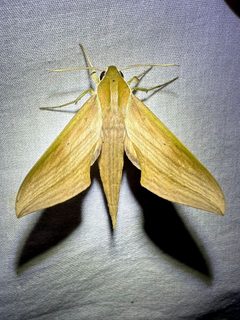
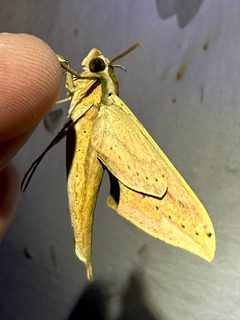
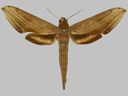
Pronunciation
How to pronounce Xylophanes libya: //zaɪˈloʊfəniːz ˈlɪbiə//
These audio files are automatically generated. While they are not always 100% accurate, they are a good starting point.
Identification
The Libya sphinx can be distinguished from similar Xylophanes by its documented wing measurements and geographic distribution. Precise diagnostic features for field identification are not well documented in available literature.
Images
Distribution
Southern Texas (USA), Mexico, Belize, Guatemala, Panama, Venezuela, Bolivia, and Paraguay. The ranges from the southern United States south and west through Central America to northern South America.
Seasonality
are probably on wing year-round in parts of the range. Documented records include October in southern Texas and April in Bolivia.
Diet
Larvae feed on Psychotria horizontalis, Psychotria nervosa, and Psychotria (Rubiaceae). feeding habits are not documented.
Host Associations
- Psychotria horizontalis - larval food plant
- Psychotria nervosa - larval food plant
- Psychotria microdon - larval food plant
Life Cycle
Complete with documented larval stage feeding on Psychotria . Specific details of , pupal, and longevity are not available.
Ecological Role
Larvae are herbivores feeding on Psychotria shrubs. The ' role as a or in is not documented.
Similar Taxa
- Other Xylophanes speciesSimilar body plan and hawkmoth ; precise differentiation requires expert examination
More Details
Taxonomic history
Originally described as Choerocampa libya by Druce in 1878, later transferred to Xylophanes.