
Macroglossum
Scopoli, 1777
Hummingbird Hawkmoths
Species Guides
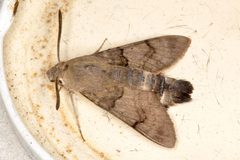
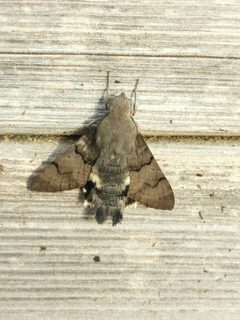
1- Macroglossum stellatarum(Hummingbird Hawk-moth)
Macroglossum is a of hawkmoths (Sphingidae) known for their rapid, hovering and or activity patterns. The genus contains approximately 100 distributed across the Old World, with the most extensively studied species being Macroglossum stellatarum, the Hummingbird Hawkmoth. Members possess elongated adapted for nectar feeding from tubular flowers. Several species exhibit migratory , with individuals capable of long-distance movements across continental Europe and into Africa. The genus serves as an important group, with some species showing specialized coevolutionary relationships with particular plant species.
Pronunciation
How to pronounce Macroglossum: /ˌmækroʊˈɡlɒsəm/
These audio files are automatically generated. While they are not always 100% accurate, they are a good starting point.
Images
Distribution
Palearctic, Oriental, and Australasian regions; individual have more restricted ranges. Macroglossum stellatarum occurs across Europe, North Africa, and Asia; Macroglossum pyrrhosticta has been documented in Northwestern India including the Gangetic Plains Biogeographic Zone.
Diet
feed on nectar from flowers. Macroglossum stellatarum has been observed feeding from Lavandula latifolia and shows innate visual preferences for blue (440 nm) and yellow-green (540 nm) wavelengths when seeking floral resources. Larvae feed on specific plants; Macroglossum pyrrhosticta has documented larval host associations though specific plant names are not detailed in available sources.
Behavior
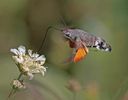
of Macroglossum stellatarum are obligate day-flyers, exhibiting peak foraging activity in evening hours (18:00–20:00 GMT) under Mediterranean summer conditions. The demonstrates strong visual position stabilization during hovering , enabling precise feeding while stationary relative to flowers. Macroglossum stellatarum shows advanced colour learning capabilities, with naïve individuals capable of associating specific colours with rewards and reversing learned preferences. Innate extension responses occur to blue and yellow visual stimuli, with weaker responses to red. Olfactory preferences are independent of visual cues and additive when combined. Thoracic temperature during foraging remains within 39–46°C despite ambient temperatures of 19–36°C, indicating active . Some exhibit migratory , with individuals flying southward across Europe to areas in the Mediterranean basin and potentially Africa.
Ecological Role
Important of tubular flowers. Macroglossum stellatarum serves as a documented pollinator of Viola cazorlensis in southern Spain, with this violet hypothesized to have evolved flowering synchronized with periods. The species contributes to nutrient transfer across latitudes through migratory movements and subsequent decomposition. Migrating individuals transport pollen over distances of 50+ kilometers, facilitating among plant .
Human Relevance
Macroglossum stellatarum is frequently mistaken for hummingbirds due to its hovering and appearance, making it a notable for public engagement with entomology. The species has been the subject of extensive research on insect vision, learning, and flight mechanics. Negative interactions have been documented with the plant Oenothera speciosa in Italy, where become trapped with stuck to flowers, representing a potential conservation concern.
Sources and further reading
- BugGuide
- Wikipedia
- iNaturalist taxon
- Catalogue of Life
- A story of a migration out of Wales (Part 2) - Buglife Blog - Buglife
- Stori am fudo allan o Gymru (Rhan 2) - Buglife Blog - Buglife
- Meet six unsung heroes of the pollination world - Buglife Blog - Buglife
- Colour Learning in the Hawkmoth Macroglossum Stellatarum
- Innate Preferences for Flower Features in the Hawkmoth Macroglossum Stellatarum
- Range extension of the Macroglossum pyrrhosticta Butler, 1875, in Northwestern India (Lepidoptera: Sphingidae)
- Activity pattern and thermal biology of a day‐flying hawkmoth (Macroglossum stellatarum) under Mediterranean summer conditions
- The year-round phenology of Macroglossum stellatarum (Linnaeus, 1758) at a Mediterranean area of South of Spain (Lepidoptera: Sphingidae)
- The Spreading in Europe of the Non-Indigenous Species Oenothera speciosa Nutt. Might Be a Threat to the Autochthonous Moth Macroglossum stellatarum (Linnaeus, 1758)? A New Case Study from Italy
- Visual position stabilization in the hummingbird hawk moth, Macroglossum stellatarum L. I. Behavioural analysis
- " INFORMATION ON THE BIOLOGY OF THE BUTTERFLY (LEPIDOPTERA, SPHINGIDAE) MACROGLOSSUM STELLATARUM (LINNAEUS, 1758) IN THE CONDITIONS OF SOUTH FERGANA"