
Apatelodes pudefacta
Dyar, 1904
Pudefacted Apatelodes Moth, Lined Apatelodes
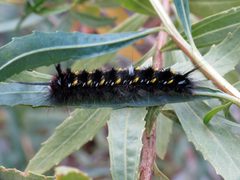
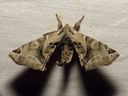
Apatelodes pudefacta is a in the Apatelodidae, described by Harrison Gray Dyar Jr. in 1904. It is found in Arizona and Mexico. The forewings measure 17–18 mm in length. The has been recorded feeding on Baccharis bigelovii as larvae.

Pronunciation
How to pronounce Apatelodes pudefacta: //ˌæpəˈtɛloʊdiːz ˌpjuːdəˈfæktə//
These audio files are automatically generated. While they are not always 100% accurate, they are a good starting point.
Identification
Distinguished from similar Apatelodes by its known geographic range (Arizona and Mexico) and specific forewing length of 17–18 mm. The 'Lined Apatelodes' suggests longitudinal wing markings, though this requires verification.
Images
Appearance
Forewings 17–18 mm in length. Specific coloration and pattern details are not documented in available sources.
Habitat
Associated with plant Baccharis bigelovii, indicating occupancy of where this shrub occurs. Specific habitat type is not documented.
Distribution
Recorded from the US state of Arizona and Mexico. Precise Mexican distribution is unspecified.
Diet
Larvae feed on Baccharis bigelovii (Bigelow's baccharis, a shrub in the Asteraceae ). feeding habits are unknown.
Host Associations
- Baccharis bigelovii - larval plant
Life Cycle
Larvae pupate in a constructed in the soil. Other developmental stages are not documented.
Behavior
occurs underground in a soil , suggesting larvae descend from plant to pupate.
Similar Taxa
- Other Apatelodes speciesSimilar and size; differentiation relies on geographic distribution and subtle morphological details
More Details
Taxonomic Note
placement has varied historically: treated as in some sources, now placed in Apatelodidae (Bombycoidea). GBIF lists status as 'DOUBTFUL' though Catalogue of Life accepts the name.
Etymology
Specific epithet 'pudefacta' is Latin, possibly referring to the soil-dwelling pupal habit ('pudere' relates to shame or modesty, 'facta' made; or possibly from 'pudicus' bashful, alluding to concealed ).