
Greya piperella
(Busck, 1904)
Greya piperella is a small in the Prodoxidae (yucca moths and relatives). The is notable for its specialized relationship with Heuchera plants, where larvae mine the flower stalks. feed on nectar from the same host flowers they use for oviposition, an unusual among prodoxid moths.
Pronunciation
How to pronounce Greya piperella: //ˈɡreɪə pɪpəˈrɛlə//
These audio files are automatically generated. While they are not always 100% accurate, they are a good starting point.
Identification
Distinguished from other Greya by geographic range and confirmed plant associations. Genitalia examination may be required for definitive identification; G. piperella occurs in more northerly and montane regions than most .
Images
Appearance
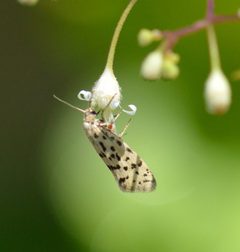
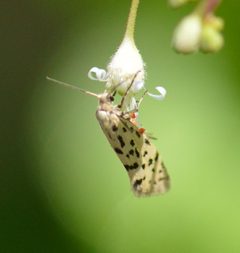
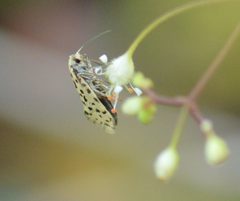
Small with wingspan 16.5–21.5 mm. Forewings appear dark with lighter speckling or mottling typical of the . Body slender, consistent with other Greya .
Habitat
Open, grassy pine forests and rockfaces in open country. Associated with supporting Heuchera cylindrica and Heuchera micrantha.
Distribution
North America: southern British Columbia to central Oregon, east to western Montana. Isolated in central California. Possible occurrence in New Mexico and Utah (unconfirmed).
Diet
Larvae feed on Heuchera cylindrica and Heuchera micrantha, mining the peduncle (flower stalk). drink nectar from flowers of the larval plants.
Host Associations
- Heuchera cylindrica - larval larvae mine the peduncle
- Heuchera micrantha - larval larvae mine the peduncle
Life Cycle
Larval stage characterized by mining in flower peduncles of Heuchera . Complete details including number of per year are not documented.
Behavior
visit plant flowers for nectar, which is atypical for Prodoxidae where adults are often non-feeding. This may facilitate pollination of the host plants.
Ecological Role
Larvae act as herbivores on Heuchera . may contribute to pollination of their plants through nectar-feeding .
Similar Taxa
- Greya solenobiellaOverlapping range in western North America; distinguished by plant associations and genitalia
- Greya politellaSimilar size and appearance; G. politella uses different plants (primarily Saxifragaceae other than Heuchera)
More Details
Nectar-feeding behavior
nectar-feeding is unusual in Prodoxidae and represents a derived trait in Greya, possibly linked to the evolution of mutualistic pollination relationships with plants.