Polistes bellicosus
Cresson, 1872
Southern Paper Wasp
Polistes bellicosus is a social native to the southeastern United States, particularly abundant in Texas. Colonies are initiated in spring by overwintered females and persist approximately eight months. Nests are constructed from weathered wood fibers formed into open-celled paper combs, often requiring rebuilding due to . The exhibits cooperative colony founding, , and behavioral differentiation among morphologically similar females.
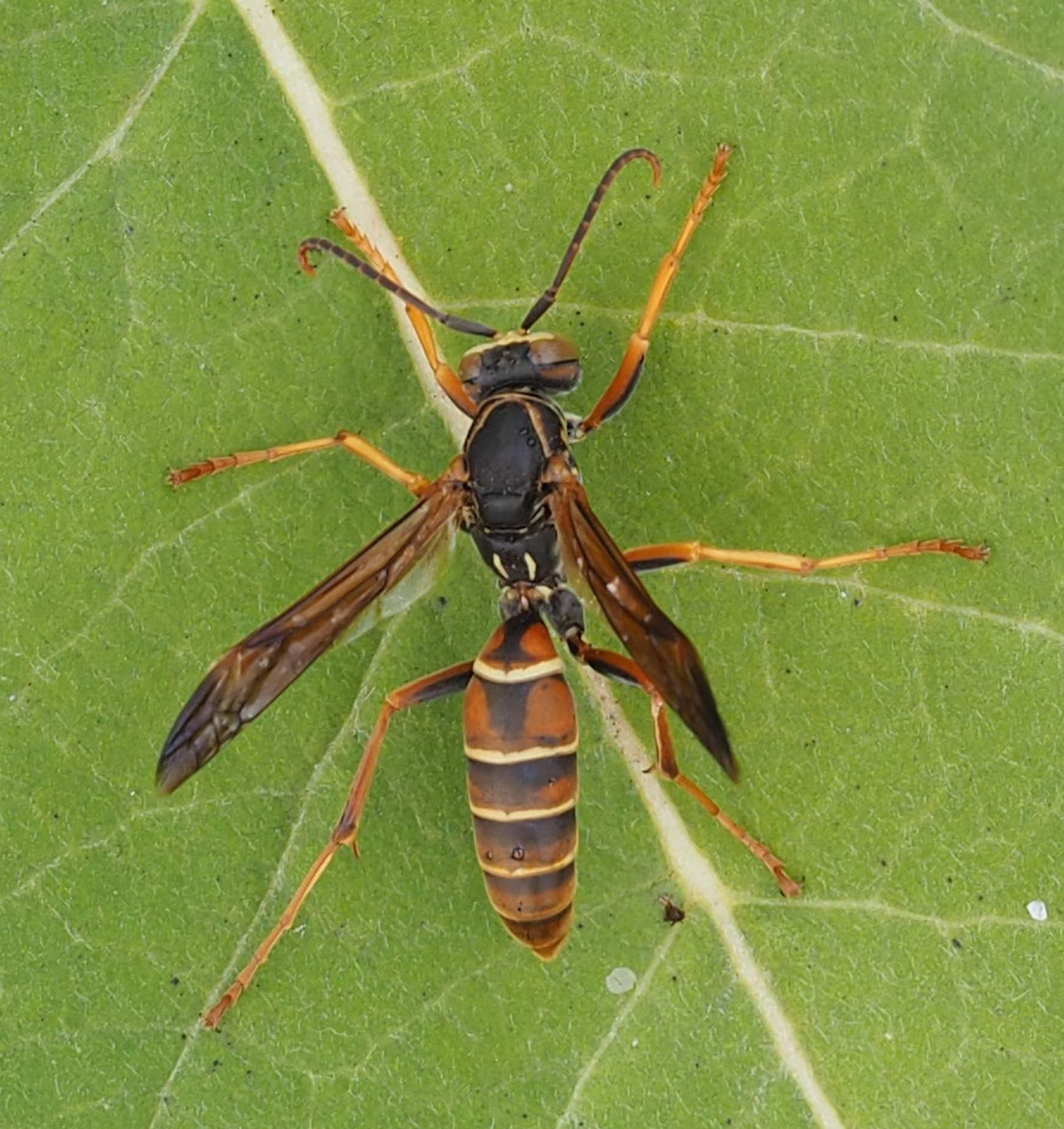
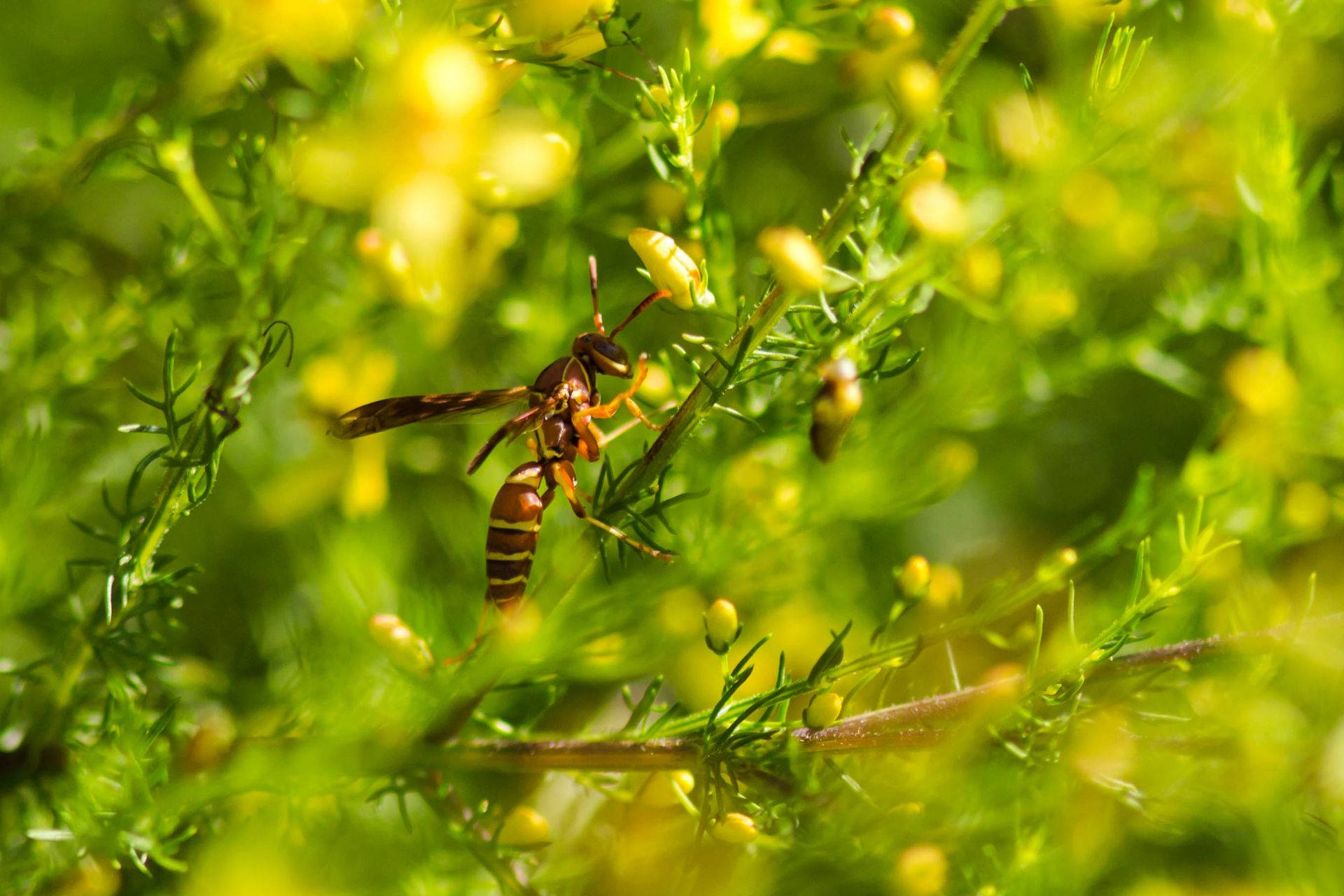
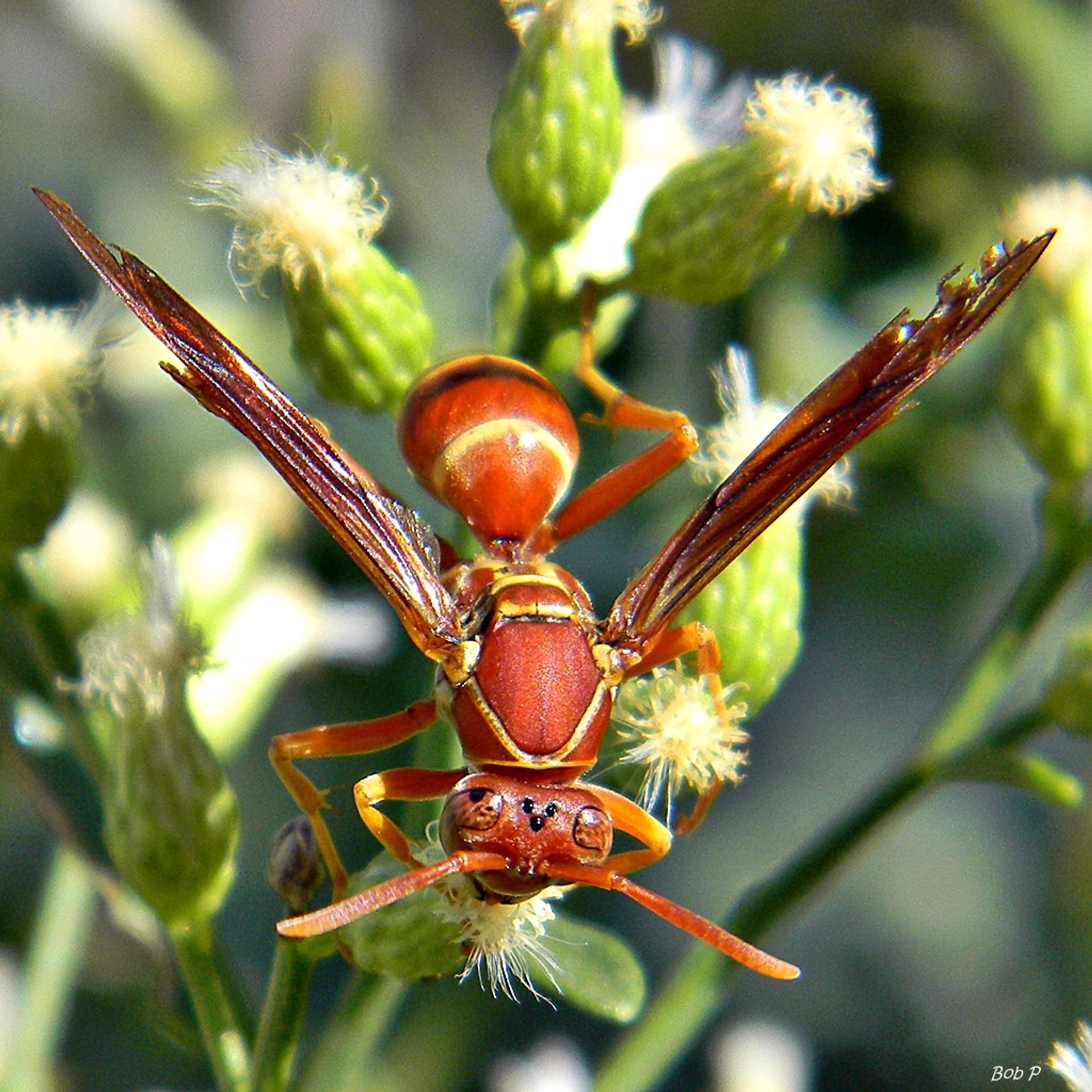
Pronunciation
How to pronounce Polistes bellicosus: /pɔˈlɪstɛs ˌbɛlɪˈkoʊsəs/
These audio files are automatically generated. While they are not always 100% accurate, they are a good starting point.
Identification
Distinguished from similar Polistes by the combination of lemon-yellow abdominal coloration and the specific mesothoracic pattern: females show a single fine central longitudinal black line, males show two lateral longitudinal lines. The species is most closely related to P. apaches. Geographic concentration in Texas, particularly the Houston area, provides additional context, though range extends to North Carolina and Florida. Nest structure—open-celled paper comb with circular peripheral and hexagonal inner cells, oriented with opening downward—aligns with characteristics but does not alone distinguish species.
Images
Habitat
Naturally occurs in native prairies and oak forests. Documented colony establishment on Baccharis sp., Ilex vomitoria, and Rubus sp. at Brazos Bend State Park, Texas. Nests are constructed in low vegetation. overlap with P. exclamans, P. dorsalis, P. metricus, and P. carolina occurs in areas with multiple habitat types including shortgrass prairie and oak forest.
Distribution
Primary range centered in Texas, with particular abundance in the Houston area. Documented observations extend to North Carolina and Florida. Distribution within the tribe Polistini, which has global representation.
Seasonality
Colony initiation occurs in March. First emerges in May. Last laid late August to September; final males and future females emerge late September to October. Colony cycle spans approximately eight months, concluding with leaving nests to seek winter shelter.
Life Cycle
Overwintered females (foundresses) initiate colonies in spring, constructing open-celled paper nests in low vegetation. First (mostly ) emerges in May; few males emerge early and mate with workers that disperse to become queens elsewhere. Workers rear subsequent broods and enlarge nests. (nonworking females) produced late season mate before to become next season's foundresses. Nest reconstruction at least once per season is common due to .
Behavior
Exhibits cooperative colony founding by multiple foundresses with established ; individual becomes , subordinates assist. typically remain as helpers in natal nests. Foundresses preferentially join nests established by sisters when solitary founding fails. Foundress mortality increases with time away from nest and decreases significantly after first workers emerge, suggesting foraging-related risk. Subordinates assume dangerous foraging tasks, reducing dominant foundress mortality. Subordinates may lay only when queen is absent and submit to aggressive queen attacks.
Ecological Role
pressure from vertebrates (birds, raccoons, opossums) and ants shapes nest dynamics; predation less common than vertebrate predation. Predation risk is size-independent, affecting colonies regardless of number. Subordinate foundresses enhance colony success through kin-selected helping , with cofoundress relatedness exceeding 50%.
Similar Taxa
- Polistes apachesMost closely related based on phylogenetic analysis; genetic similarity supported by morphological larval characteristics.
- Polistes exclamansSympatric at Brazos Bend State Park and other Texas localities; distinguished by specific color pattern differences.
- Polistes dorsalisSympatric in multiple types; requires examination of thoracic markings and abdominal coloration for separation.
- Polistes metricusCo-occurs in native prairie and oak forest ; morphological and color pattern differences allow identification.
- Polistes carolinaShared at Brazos Bend State Park; specific diagnostic features not detailed in source material.
- Climaciella brunnea mantisfly that exhibits remarkable of Polistes paper wasps; regional color variants in Florida specifically resemble P. bellicosus with more brown than yellow in , potentially causing misidentification.
More Details
Genetic Relatedness
Colonies do not follow the typical Hymenopteran haplodiploid pattern where are more related to sisters (0.75) than offspring (0.50). Lower observed relatedness may result from multiple mating by queens or multiple -layers within colonies.
Nest Architecture
along nest perimeter are roughly circular; inner cells are more hexagonal. Nests contain only one layer of cells, oriented with opening downward or toward the bottom. Paper derived from weathered wood fibers manipulated with into thin sheets.
Queen-Subordinate Conflict
Despite morphological similarity among all females, queens aggressively suppress -laying through attacks. Workers submit to maintain helper role. Any female retains potential to become if opportunity arises.