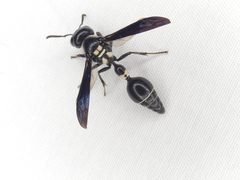
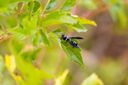
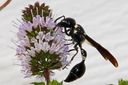
Zethus spinipes

Classification

Pronunciation

How to pronounce Zethus spinipes: //ˈzɛθʊs ˈspiːnɪpiːz//

These audio files are automatically generated. While they are not always 100% accurate, they are a good starting point.

Images

Summary

Zethus spinipes is a species of stinging wasp found in the eastern United States, inhabiting fields and meadows with flowers. It has two subspecies that vary in their geographic distribution.

Physical Characteristics

Males: fore wing length 9.5–11 mm; Females: fore wing length 12–14 mm.

Identification Tips

Distinguished by size and the specific morphological characteristics of males and females. Look for their stinging behavior typically associated with wasps.

Habitat

Fields and meadows, often in areas with flowers.

Distribution

Eastern United States, ranging from Massachusetts to Florida, and westward to Texas and Kansas.

Diet

Adult wasps primarily feed on nectar, while larvae are generally carnivorous, feeding on other insects.

Life Cycle

The life cycle includes egg, larval, pupal, and adult stages, typical of wasps.

Reproduction

Females typically build nests, where they lay eggs and provide food for the developing larvae.

Predators

Birds and other insectivorous animals may prey upon Zethus spinipes.

Ecosystem Role

Zethus spinipes plays a role in pollination as adults feed on nectar. The larvae help control insect populations.

Health Concerns

Potential for stinging, which can be painful and lead to allergic reactions in sensitive individuals.

Collecting Methods

  • Net collecting
  • Trapping with bait
  • Visual observation during active months

Preservation Methods

  • Ethanol preservation
  • Pinning and drying for morphological studies

Misconceptions

Often confused with more aggressive wasps or hornets, Zethus spinipes is less aggressive compared to others in the family.

Tags

  • Zethus
  • wasps
  • Vespidae
  • insects
  • Eastern United States