
Pseudepipona
de Saussure, 1856
Species Guides
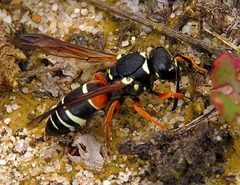
1A of potter wasps ( Eumeninae) distributed across the Palearctic, Nearctic, Afrotropical, and Australian regions. are organized into species-groups based on morphological traits, particularly the presence or absence of long setae on the gena, , and . The genus has undergone recent taxonomic revision, with multiple new species and elevated or described.
Pronunciation
How to pronounce Pseudepipona: //sjuːdˌɛpɪˈpoʊnə//
These audio files are automatically generated. While they are not always 100% accurate, they are a good starting point.
Identification
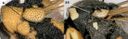
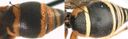
-level identification relies on characters including: presence or absence of long setae on gena, , and ; shape of the transverse carina of the propodeum (laterally forming a tooth or blunt angle in some groups); and male mandibular (preapical tooth width and length ratio). The lativentris-group possesses long setae; the herrichii-group lacks them.
Images
Distribution
Palearctic, Nearctic, Afrotropical, and Australian regions. Documented occurrences include: western and central Europe (France, Switzerland, Portugal, Spain, Italy, Croatia), Mediterranean islands (Crete, Cyprus, Ibiza, Formentera), North Africa (Morocco, Tunisia), Middle East (Turkey, Lebanon, Israel, Palestine, Iran), Central Asia (Turkmenistan, Tajikistan, Uzbekistan, Kyrgyzstan, Kazakhstan, Afghanistan), Russia, China, and India.
Similar Taxa
- TrichepiponaFormer subgenus of Pseudepipona; now synonymized with the nominotypical subgenus. Distinguished historically by presence of long setae on gena, , and , but this trait is now treated as a -group character within Pseudepipona.
Sources and further reading
- BugGuide
- Wikipedia
- GBIF taxonomy match
- iNaturalist taxon
- NCBI Taxonomy
- Catalogue of Life
- Unexpected diversity in the Pseudepipona lativentris species-group (Hymenoptera: Vespidae: Eumeninae)
- Revision of the Pseudepipona herrichii-group of the eumenine wasps (Hymenoptera: Vespidae: Eumeninae) with the description of two new species from China and Russia