
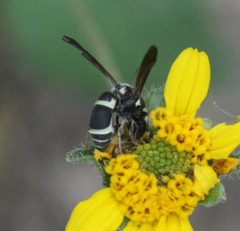
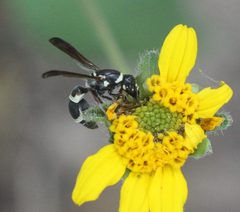
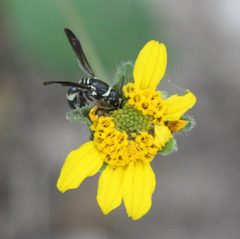
Cephalodynerus deformiceps
(Bohart, 1942)
Cephalodynerus deformiceps is a of potter wasp in the Eumeninae, first described by Bohart in 1942. It belongs to a characterized by distinctive . The species is known from very few records, with limited published information on its .
Pronunciation
How to pronounce Cephalodynerus deformiceps: //ˌsɛfəloʊˈdaɪnərəs dɪˈfɔrmaɪsɛps//
These audio files are automatically generated. While they are not always 100% accurate, they are a good starting point.
Identification
The specific epithet "deformiceps" refers to an unusual or modified structure, a diagnostic feature for this . Members of Cephalodynerus can be distinguished from related eumenine by their distinctive cephalic , though species-level identification requires examination of detailed structural characters.
Images
Distribution
The is known from western North America. Published records indicate occurrence in California, USA.
Similar Taxa
- Other Cephalodynerus speciesShare the -level characteristic of modified structure; require detailed morphological examination for separation
- Other Eumeninae generaSimilar general body plan and nesting ; distinguished by capsule structure and other cephalic characters
More Details
Taxonomic history
The was originally described by George E. Bohart in 1942. The Cephalodynerus was established to accommodate eumenine with distinctive modifications. placement varies between sources: treated as Vespidae by Catalogue of Life and iNaturalist, but as Eumenidae by GBIF, reflecting ongoing taxonomic debate regarding versus family rank for potter wasps.
Data limitations
With only one observation in iNaturalist and minimal published literature, most biological aspects of this remain undocumented. The original description and any subsequent taxonomic revisions would be the primary sources for detailed information.