
Typhoctes striolatus
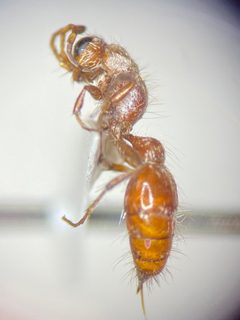
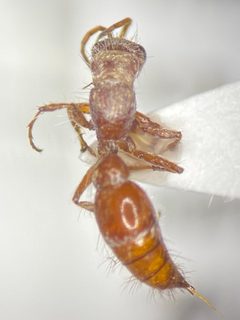
Typhoctes striolatus is a of wingless in the Chyphotidae, a small group of wasps closely related to velvet ants (Mutillidae). Like other chyphotids, this species exhibits extreme : females are and resemble ants, while males possess wings. The Typhoctes is one of two genera in Chyphotidae and is characterized by reduced wing venation in males and specific antennal structures. Very few observations of this species exist in scientific databases.
Pronunciation
How to pronounce Typhoctes striolatus: /tɪˈfɒktiːz ˌstraɪəˈlɑːtəs/
These audio files are automatically generated. While they are not always 100% accurate, they are a good starting point.
Identification
Distinguished from Mutillidae (velvet ants) by antennal structure and wing venation patterns in males. Separation from the other chyphotid , Chyphotes, requires examination of male wing venation details and antennal segmentation. The striolated body surface may aid identification if visible. Definitive identification requires examination of morphological characters not visible in field observations.
Images
Appearance
Females are wingless with a compact, -like body form. Males possess wings with reduced venation characteristic of the . The epithet 'striolatus' suggests the presence of fine striations or longitudinal lines on the body surface. Body coloration and specific morphological details remain poorly documented due to rarity of specimens.
Distribution
Observations recorded from western North America, including California. The precise range is poorly defined due to scarcity of records.
Behavior
Females are ground-dwelling and likely search for in soil or leaf litter. Males are winged and presumably engage in mate-searching , as observed in related chyphotid .
Ecological Role
; specific relationships unknown. Chyphotidae as a are believed to parasitize stages of other insects, possibly larvae or orthopteran pods based on limited biological data from .
Human Relevance
No known economic or medical importance. Rarity of encounters results in minimal human interaction.
Similar Taxa
- Chyphotes spec. (Chyphotidae)The only other in Chyphotidae; distinguished by male wing venation and antennal details
- Mutillidae (velvet ants)Similar females with -like appearance; distinguished by antennal structure and wing venation in males
More Details
Taxonomic note
Chyphotidae is a small of approximately 70 described , historically treated as a of Mutillidae but now recognized as distinct. The family is characterized by reduced wing venation, specific antennal features, and extreme . Biological knowledge for most species, including T. striolatus, remains minimal.
Data scarcity
Only 2 observations recorded in iNaturalist as of source date, reflecting genuine rarity or cryptic habits rather than collection alone. The is known from very few museum specimens.