Macrophya punctumalbum
(Linnaeus, 1767)
Privet Sawfly
Macrophya punctumalbum, commonly known as the privet , is a tenthredinid sawfly measuring approximately 10 mm in length. The exhibits strong and is substantially parthenogenetic, with males being rare and much smaller than females. are active from May through July and feed on pollen and nectar, while larvae develop on leaves of Oleaceae including ash, privet, and lilac. It is widespread across Europe and has been introduced to North America.

Pronunciation
How to pronounce Macrophya punctumalbum: /məˈkɹoʊfiə ˌpʌŋktəmˈælbəm/
These audio files are automatically generated. While they are not always 100% accurate, they are a good starting point.
Identification
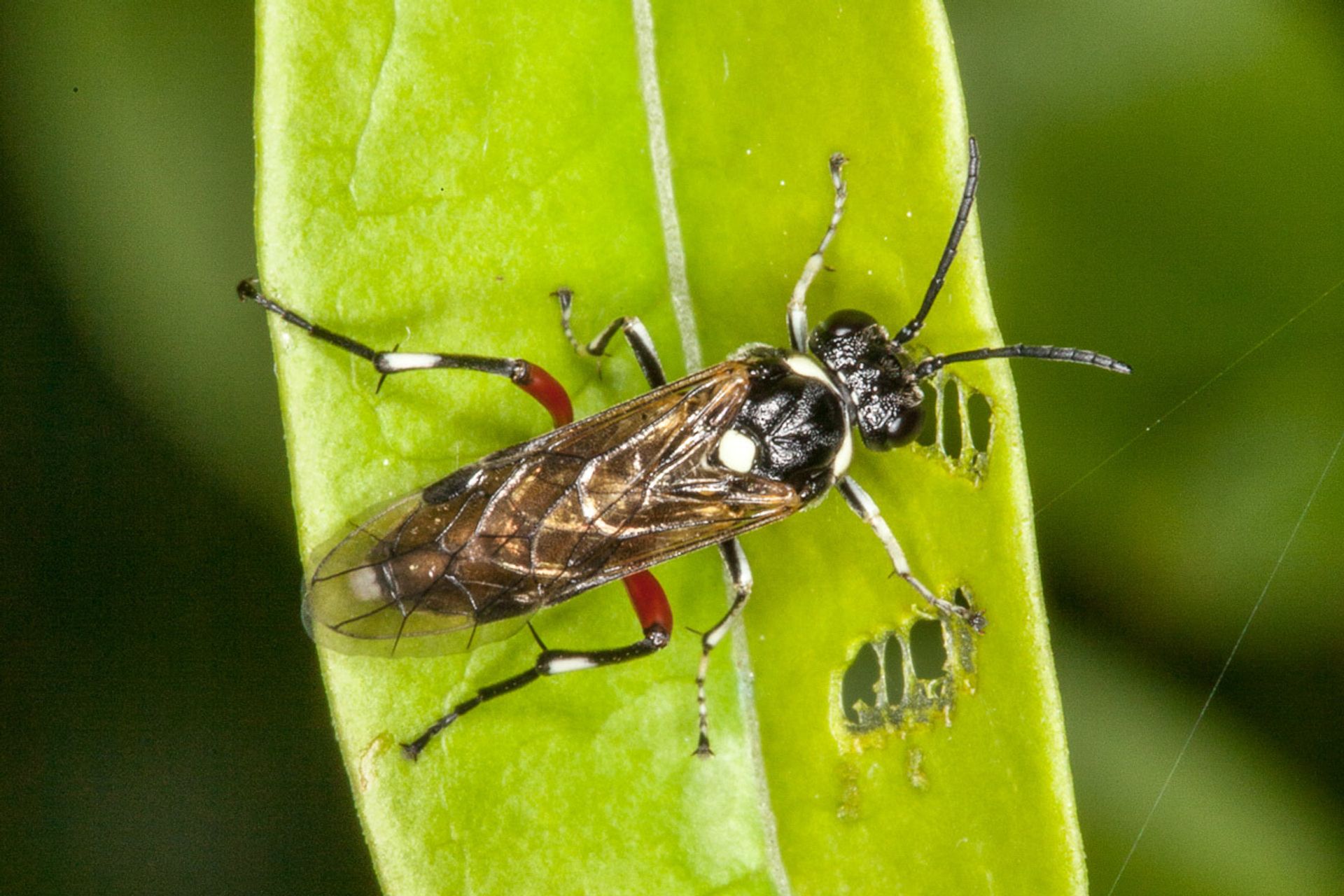
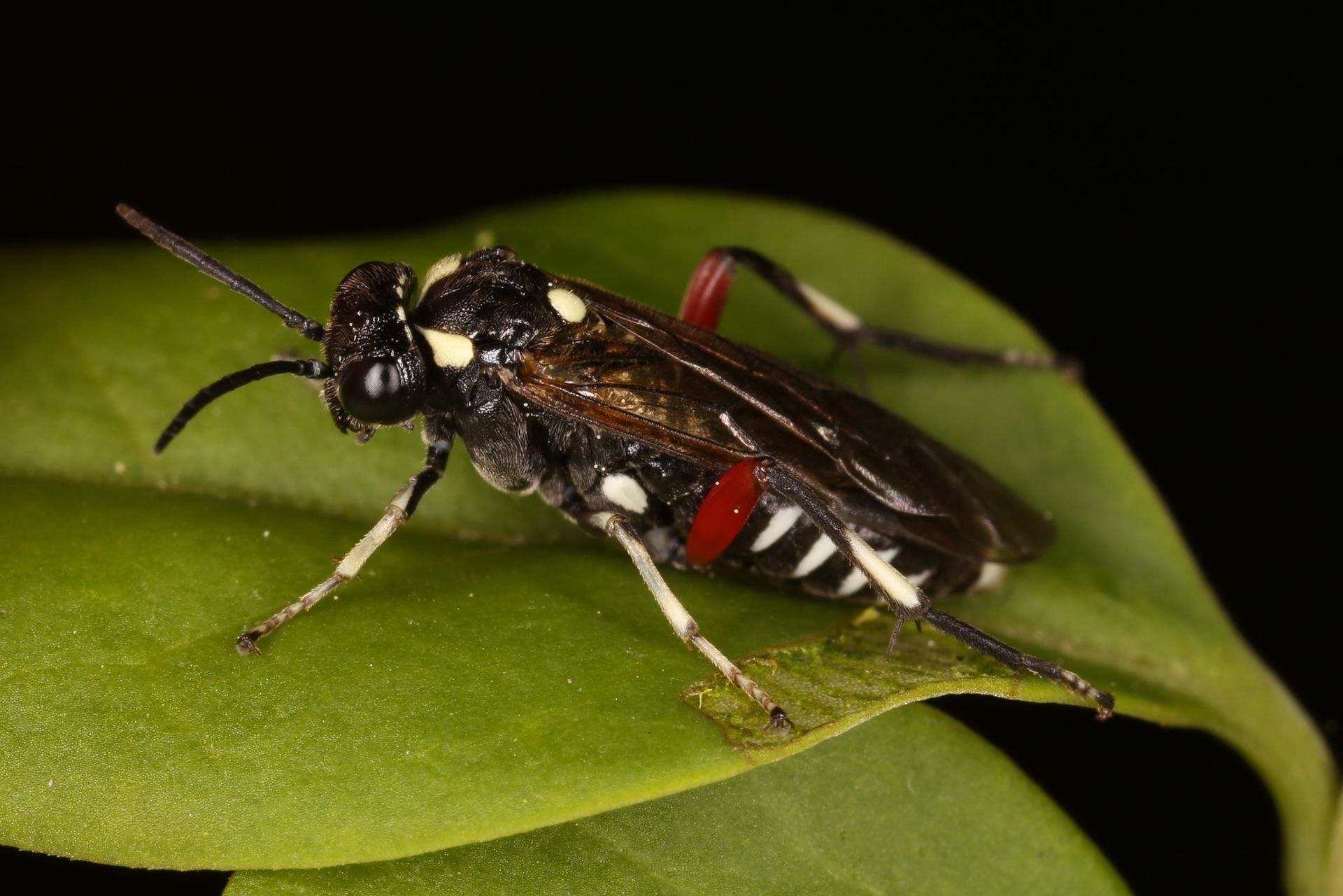
Females are distinguished by the combination of black body, bright red hind , black tibiae with white markings, and prominent white spots on tergites and scutellum. Males are uniformly black and much smaller, but are rarely encountered due to parthenogenetic . The larval stage can be identified by association with Oleaceae plants.
Images
Appearance
Females have a black body with bright red hind and black tibiae with white apices. Tergites display three to seven white spots on each side, and a large white spot covers most of the scutellum. Males are considerably smaller than females and entirely black.
Habitat
Associated with supporting Oleaceae plants, particularly areas with ash (Fraxinus), privet (Ligustrum), and lilac (Syringa). Specific microhabitat preferences for are not documented.
Distribution
Native to most of Europe, extending eastward to the Caucasus. Introduced to North America, with established in Canada and the United States.
Seasonality
are active from May through July. Larval development occurs during the growing season of plants.
Diet
feed on pollen and nectar. Larvae feed on leaves of Oleaceae : Fraxinus (ash), Ligustrum (privet), and Syringa (lilac).
Host Associations
- Fraxinus - larval Ash
- Ligustrum - larval Privet ; source of
- Syringa - larval Lilac
Life Cycle
Larvae develop on leaves of plants in Oleaceae. The is substantially parthenogenetic, with males being very rare. Specific details of -laying, , and stages are not documented in available sources.
Behavior
is primarily parthenogenetic; males are rarely produced. are observed feeding on pollen and nectar. Larvae feed externally on plant leaves.
Ecological Role
Larvae function as folivores on Oleaceae . may contribute to pollination while feeding on pollen and nectar. Specific ecological impacts or have not been quantified.
Human Relevance
Larvae can cause defoliation of ornamental Oleaceae plants including privet, lilac, and ash. The has been introduced to North America, where it may impact cultivated and native Oleaceae. No other documented human interactions.
Similar Taxa
- Other Macrophya speciesShare general body plan and characteristics; distinguished by specific color pattern of red , white tibial markings, and tergite spotting in females.
- Other Tenthredinidae on OleaceaeMay overlap in use; identification requires examination of coloration and larval .
More Details
Parthenogenesis
The is substantially parthenogenetic, meaning females can produce offspring without . This explains the extreme rarity of males in natural .
North American Introduction
Documented establishment in North America includes both Canada and the United States, with research by Hoebeke and Johnson detailing plants, seasonal history, and stage descriptions for introduced .