
Halidamia
Benson, 1939
Species Guides
1- Halidamia affinis(Bedstraw Sawfly)
Halidamia is a of in the Tenthredinidae, established by Benson in 1939. in this genus are known to feed on ferns, particularly bracken (Pteridium aquilinum). The genus has been recorded from northern Europe and North America.
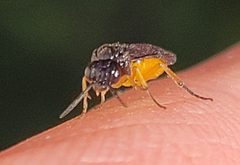
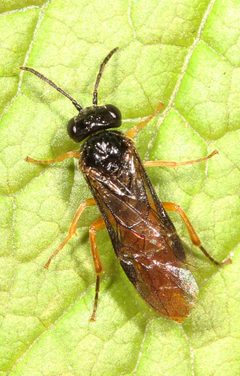
Pronunciation
How to pronounce Halidamia: /ˌhæ.lɪˈdæm.i.ə/
These audio files are automatically generated. While they are not always 100% accurate, they are a good starting point.
Identification
Members of Halidamia can be distinguished from related by features of the sawsheath and lancet in females, and by details of male genitalia. Specific identification requires examination of these morphological structures.
Images
Habitat
Associated with fern-dominated , particularly areas supporting bracken (Pteridium aquilinum) and other fern .
Distribution
Recorded from Denmark, Norway, Sweden, and the northeastern United States (Vermont).
Diet
Larvae feed on ferns, specifically documented on bracken (Pteridium aquilinum).
Host Associations
- Pteridium aquilinum - larval food plantbracken fern
Life Cycle
in this have the typical holometabolous development of Tenthredinidae: , larva, pupa, and stages. Larvae are external feeders on fern fronds.
Behavior
Larvae feed externally on fern foliage. do not sting, as is characteristic of which lack the narrow waist and associated stinging apparatus of .
Ecological Role
Herbivores that contribute to fern herbivory dynamics in their .
Similar Taxa
- AneugmenusAnother fern-feeding in Tenthredinidae; distinguished by morphological details of genitalia and sawsheath structure
- StrongylogasterRelated Tenthredinidae ; Halidamia differs in association (ferns vs. various plants) and structural characters
More Details
Taxonomic history
The was established by Benson in 1939 to accommodate previously placed in other genera but distinguished by unique morphological features.