
Stethomostus fuliginosus
(Schrank, 1781)
Smoky Buttercup Sawfly
Stethomostus fuliginosus is a of in the Tenthredinidae, commonly known as the Smoky Buttercup Sawfly. It is a member of the suborder , distinguished from other Hymenoptera by the broad connection between its and . The species has been documented in parts of Europe and North America.
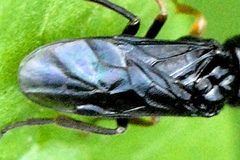
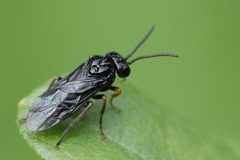
Pronunciation
How to pronounce Stethomostus fuliginosus: /stɛˈθoʊmoʊstəs ˌfjuːlɪdʒɪˈnoʊsəs/
These audio files are automatically generated. While they are not always 100% accurate, they are a good starting point.
Images
Distribution
Recorded from Belgium and Canada (New Brunswick, Quebec). The appears to have a transatlantic distribution, with in western Europe and eastern North America.
Host Associations
- Ranunculus - larval plantAssociated with buttercup plants ( Ranunculus), as indicated by the . Specific within the genus are not documented in available sources.
Ecological Role
As a herbivorous , larvae likely contribute to nutrient cycling through herbivory on their plants. The may serve as prey for and other natural enemies, though specific records are not documented.
Similar Taxa
- Other Stethomostus speciesMembers of the same share the general body plan and wing venation characteristic of Tenthredinidae. Distinguishing features between typically involve subtle differences in coloration, structure, and genitalia.
- Other Tenthredinidae sawfliesMany in this are superficially similar in appearance. S. fuliginosus may be distinguished by its dark, smoky coloration (reflected in the specific epithet 'fuliginosus', meaning sooty or smoky) and association with Ranunculus plants.
More Details
Taxonomic authority
The was first described by Schrank in 1781, making it one of the earlier-described species. The original description predates modern taxonomic conventions for the .
Common name origin
The 'Smoky Buttercup ' combines the dark coloration implied by 'fuliginosus' (smoky/sooty) with its documented association with buttercup plants (Ranunculus).