
Xeris
Costa, 1894
horntails
Species Guides
3- Xeris indecisus
- Xeris morrisoni
- Xeris spectrum(wood wasp)
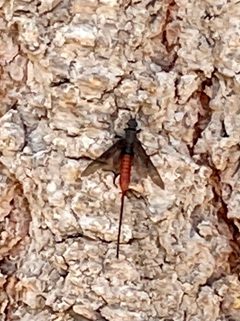
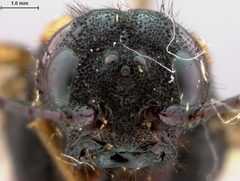

Pronunciation
How to pronounce Xeris: //ˈksɛrɪs//
These audio files are automatically generated. While they are not always 100% accurate, they are a good starting point.
Identification
Images
Habitat
Associated with forested environments. In North America, ranges from forests in Alaska and Canada through temperate zones to southern Mexico (Chiapas). In Eurasia, occupies temperate and boreal regions as well as mountainous areas of southern Eurasia.
Distribution
North America and Eurasia. North American range extends from Alaska and Canada south to Chiapas, Mexico. Eurasian distribution includes temperate and regions plus mountains of southern Eurasia (Morocco, India, China, Taiwan).
Similar Taxa
- Other Siricidae generaXeris differs in hind wing venation (lacks cup), has a small vertical ridge behind the , and possesses a metatibial spur—features not combined in other .
More Details
Taxonomic history
The Neoxeris was erected in 1987 for Neoxeris melanocephala, but was synonymized with Xeris in 2012 when the was transferred. X. melanocephalus was subsequently synonymized with X. himalayensis.