Xanthocampsomeris completa
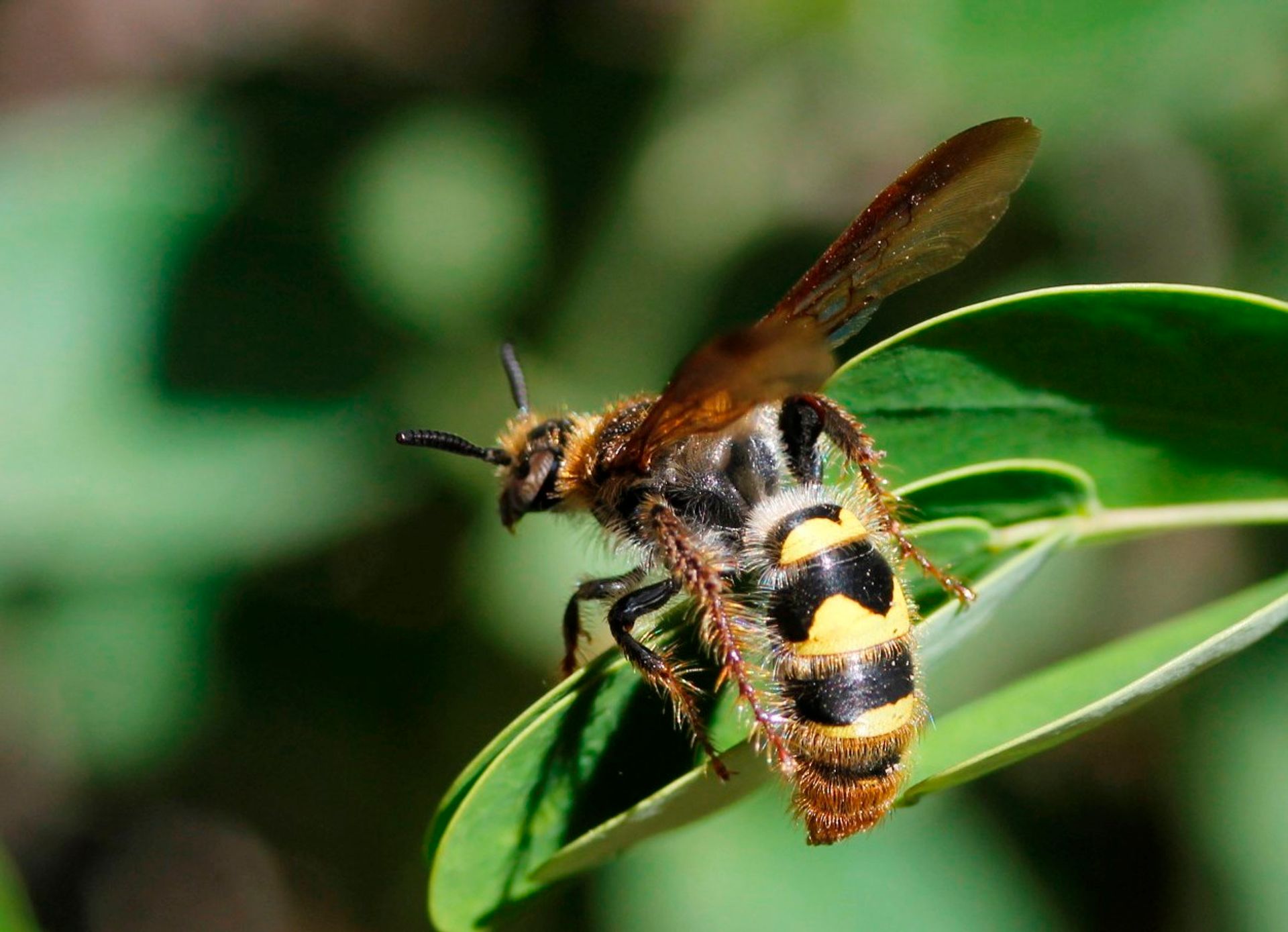
Xanthocampsomeris completa is a of scoliid in the Scoliidae. The Xanthocampsomeris was established relatively recently, with species previously placed in Campsomeris. This species is known from the Americas and is characterized by yellow and black coloration typical of the genus.
Pronunciation
How to pronounce Xanthocampsomeris completa: /ˌzænθoʊkæmpˈsɒmɛrɪs kəmˈpliːtə/
These audio files are automatically generated. While they are not always 100% accurate, they are a good starting point.
Identification
Xanthocampsomeris completa can be distinguished from related scoliid wasps by its combination of yellow and black integumental coloration, with the yellow markings typically extensive on the metasoma. The Xanthocampsomeris differs from Campsomeris sensu stricto in genitalic and wing venation characters. Females are winged; males may be distinguished by genitalic structure. Detailed identification requires examination of male genitalia and wing venation patterns.
Images
Distribution
Recorded from the Americas, with observations concentrated in Central and South America. Specific country records require verification from specimen data.
Ecological Role
As with other Scoliidae, are likely nectar feeders at flowers, while larvae are of scarabaeid larvae (white ) in soil. This parasitoid relationship contributes to natural regulation of scarab .
Similar Taxa
- Campsomeris speciesHistorically congeneric; distinguished by genitalic and wing venation characters that separate Xanthocampsomeris as a distinct
- Other ScoliidaeYellow and black coloration pattern is shared with many scoliid wasps; precise identification requires examination of diagnostic morphological characters
More Details
Taxonomic History
Xanthocampsomeris was erected as a new by Kimsey in 2005, with transferred from Campsomeris based on phylogenetic analysis of morphological characters. The genus name refers to the yellow (xantho-) coloration characteristic of the group.
Data Limitations
Published biological and ecological information specifically for X. completa is sparse. Most knowledge is inferred from -level or -level studies of Scoliidae. The 462 iNaturalist observations suggest this is a relatively frequently encountered , but detailed natural history studies are lacking.