
Paracyphononyx
Gribodo, 1884
spider wasps
Species Guides
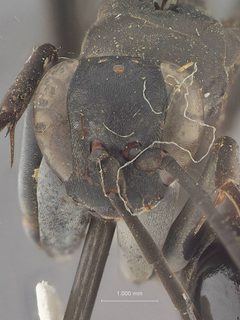
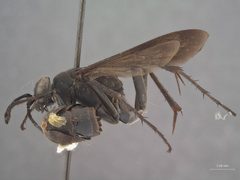
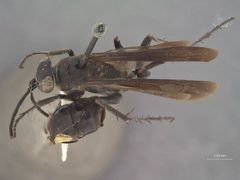
1Paracyphononyx is a of spider wasps (Pompilidae) distributed across tropical and warmer temperate regions worldwide. The genus contains approximately 51 recognized . Members are distinguished from other pompilids by their koinobiont ectoparasitoid strategy: rather than permanently paralyzing spiders, they allow the spider to resume normal activity after -laying, with the larva developing externally on the living host.
Pronunciation
How to pronounce Paracyphononyx: //ˌpærəˌsaɪfəˈnoʊnɪks//
These audio files are automatically generated. While they are not always 100% accurate, they are a good starting point.
Images
Distribution
Tropical and warmer temperate regions globally. Documented from Africa (Cameroon, Ghana, Uganda, Angola, Democratic Republic of Congo, Zimbabwe, South Africa, Ethiopia, Kenya, Mali, Egypt, Yemen), Asia (Japan, India, Philippines, Central Asia, Asia Minor), South America (Brazil, Ecuador, Peru, Argentina, Paraguay, Panama, Canary Islands), Australia, Madagascar, and eastern and central United States.
Host Associations
- Trochosa sp. (Lycosidae) - koinobiont ectoparasitoidSpecific for P. scapulatus; host resumes normal activity after
Life Cycle
laid on spider . Larva develops externally through five instars while host remains active and mobile. Fifth instar larva consumes host abdomen, killing the spider. Larva then constructs cocoon and pupates. emerges from cocoon after approximately 32 days.
Behavior
Ecological Role
of spiders, regulating spider through specialized exploitation strategy.
Similar Taxa
- Other PompilidaeMost pompilids permanently paralyze spiders with venom; Paracyphononyx uniquely employs koinobiont strategy allowing host recovery and continued activity
More Details
Taxonomic scope
contains 51 recognized with broad geographic distribution spanning multiple continents. Species-level diversity particularly high in Africa and South America.
Parasitoid strategy significance
The koinobiont ectoparasitoid lifestyle represents a distinct evolutionary within Pompilidae, with potential advantages including reduced manipulation costs and avoidance through host mobility.
Sources and further reading
- BugGuide
- Wikipedia
- GBIF taxonomy match
- iNaturalist taxon
- NCBI Taxonomy
- Catalogue of Life
- Uncategorized | Blog - Part 7
- Paracyphononyx scapulatus (Hymenoptera, Pompilidae), a koinobiont ectoparasitoid of Trochosa sp. (Araneae, Lycosidae)
- Figure 1 from: Souza HS, Messas YF, Masago F, dos Santos ED, Vasconcellos-Neto J (2015) Paracyphononyx scapulatus (Hymenoptera, Pompilidae), a koinobiont ectoparasitoid of Trochosa sp. (Araneae, Lycosidae). Journal of Hymenoptera Research 46: 165-172. https://doi.org/10.3897/JHR.46.5833
- Figure 2 from: Souza HS, Messas YF, Masago F, dos Santos ED, Vasconcellos-Neto J (2015) Paracyphononyx scapulatus (Hymenoptera, Pompilidae), a koinobiont ectoparasitoid of Trochosa sp. (Araneae, Lycosidae). Journal of Hymenoptera Research 46: 165-172. https://doi.org/10.3897/JHR.46.5833