
Osmia texana
Cresson, 1872
Texas Mason Bee, Texas osmia
Osmia texana, commonly known as the Texas , is a solitary in the Megachilidae. It is native to Central America and North America. As a member of the Osmia, it is a cavity-nesting bee that uses mud to construct and seal its nest . Like other mason bees, it is a of flowering plants, though specific ecological details for this species remain limited in available literature.
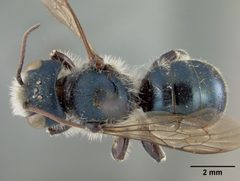
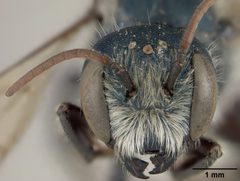
Pronunciation
How to pronounce Osmia texana: /ˈɒz.mi.ə tɛkˈsɑː.nə/
These audio files are automatically generated. While they are not always 100% accurate, they are a good starting point.
Images
Distribution
Central America and North America. Distribution records from GBIF indicate presence in Middle America and North America.
Ecological Role
As a member of the Osmia, O. texana functions as a of flowering plants. Mason bees are generally considered efficient pollinators due to their method of carrying pollen on the underside of their (scopa) rather than on their legs, resulting in more frequent pollen transfer between flowers.
More Details
Taxonomic note
The was described by Ezra Townsend Cresson in 1872. The epithet 'texana' refers to Texas, suggesting the type locality or region of original description.
Data limitations
Despite being a described with a recognized geographic range, specific biological and ecological information for Osmia texana appears sparse in published literature. Most available information comes from taxonomic databases rather than ecological studies.
Sources and further reading
- BugGuide
- Wikipedia
- GBIF taxonomy match
- iNaturalist taxon
- NCBI Taxonomy
- Catalogue of Life
- Sharing Research About BOB | Bug Squad
- 'Am I Even a Bee?' Identity Crisis Unfolds in This Charming Book | Bug Squad
- Welcome mason bees, Osmia spp. — Bug of the Week
- Mason bees make their belated debut, Osmia spp. — Bug of the Week
- Is This Non-Native Mason Bee an Invasive Species?
- European Mason Bee Lands in North America's Pacific Northwest, Likely to Spread