
Megachile zaptlana
Cresson, 1878
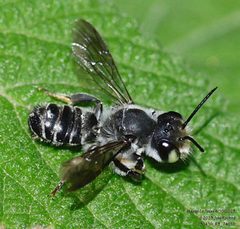
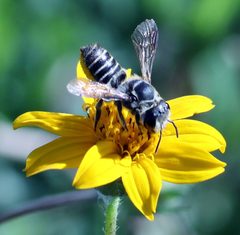
Megachile zaptlana is a solitary leafcutter bee in the Megachilidae, first described by Cresson in 1878. The belongs to the subgenus Sayapis and has been documented across the Americas from the southern United States through Central America to South America. As a member of the Megachile, it exhibits the characteristic trait of cutting leaves or other plant materials to line its nest cavities. Research indicates it utilizes pre-existing cavities for nesting and shows specific floral associations, though detailed natural history remains incompletely documented.
Pronunciation
How to pronounce Megachile zaptlana: /ˌmɛɡəˈkaɪli ˌzæptˈlænə/
These audio files are automatically generated. While they are not always 100% accurate, they are a good starting point.
Images
Distribution
Documented across the Caribbean, Middle America, North America, and South America. Specific records from Brazil include the states of Amazonas (BR-AM), Bahia (BR-BA), Espírito Santo (BR-ES), Goiás (BR-GO), Maranhão (BR-MA), Minas Gerais (BR-MG), Mato Grosso do Sul (BR-MS), Mato Grosso (BR-MT), Pará (BR-PA), Paraíba (BR-PB), Paraná (BR-PR), Rio de Janeiro (BR-RJ), Roraima (BR-RR), Rio Grande do Sul (BR-RS), Santa Catarina (BR-SC), and São Paulo (BR-SP).
Behavior
Solitary nesting using pre-existing cavities. Exhibits specific floral associations during foraging.
More Details
Taxonomic placement
Placed in subgenus Sayapis within the Megachile. The subgenus Sayapis is characterized by specific morphological traits related to structure and nesting , though precise diagnostic features for M. zaptlana within this subgenus require examination.
Research status
A 2019 study in Journal of Apicultural Research examined nesting and flower preferences, indicating active research interest but limited comprehensive natural history documentation in accessible literature.
Sources and further reading
- BugGuide
- Wikipedia
- GBIF taxonomy match
- iNaturalist taxon
- Catalogue of Life
- Looking for Cheap Urban Real Estate | Bug Squad
- In Search of the World's Biggest Bee: How It Came to 'Bee' | Bug Squad
- Photographer Allan Jones Exudes Patience, Skill and Talent | Bug Squad
- The Most Incredible Image of a Leafcutter Bee | Bug Squad
- The Native Bees in the UC Davis Bee Haven | Bug Squad
- Mailbox posts are fine homes for giant resin bees, Megachile sculpturalis — Bug of the Week
- Nesting biology and flower preferences of Megachile (Sayapis) zaptlana