
Coelioxys menthae
Cockerell, 1897
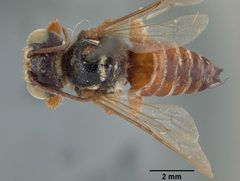
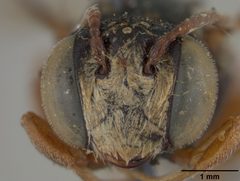
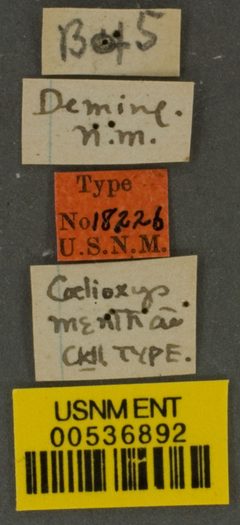
Coelioxys menthae is a of cuckoo bee in the Megachilidae. As a member of the Coelioxys, it is a that targets leafcutter bees (Megachile species). The species was described by Cockerell in 1897 and occurs in North America and Middle America.
Pronunciation
How to pronounce Coelioxys menthae: //ˌsiːliˈɒksɪs ˈmɛnθi//
These audio files are automatically generated. While they are not always 100% accurate, they are a good starting point.
Identification
Members of the Coelioxys can be recognized by their pointed, triangular with a sharp spine at the tip—a distinctive feature that gives them the 'sharp-tailed bees.' Males have more slender abdomens than females. Coelioxys generally resemble their Megachile in size and coloration but lack the dense scopal hairs on the underside of the abdomen used by female leafcutter bees for pollen transport. Specific distinguishing features for C. menthae relative to other Coelioxys species are not documented in available sources.
Images
Habitat
Distribution
North America and Middle America. GBIF records indicate presence in both regions, though specific country-level distribution details are not well documented.
Diet
Host Associations
Life Cycle
As a , Coelioxys menthae does not construct its own nests or collect pollen. Females deposit between the leaf fragments lining Megachile nest . Upon hatching, the parasite larva kills the egg or larva and consumes the pollen-nectar provision intended for the host offspring. Development completes within the host cell, with emerging the following season.
Behavior
Females are known to hover around active Megachile nesting sites, searching for open nest tunnels to infiltrate. They follow chemical cues to locate nests. Males are often observed patrolling flowers, particularly those visited by their hosts.
Ecological Role
of leafcutter bees. Functions as a regulator of Megachile . bees contribute to pollination through nectar feeding.
Human Relevance
May be observed by beekeepers and naturalists monitoring leafcutter bee nesting sites, including artificial hotels. Presence indicates a healthy of Megachile bees. No direct economic impact documented.
Similar Taxa
- NomadaAlso of bees, but Nomada typically parasitize Andrena (mining bees) rather than Megachile; Nomada often have more -like coloration with yellow and black or red and black patterns
- SphecodesBlood bees are of other halictid bees; typically smaller and often reddish in coloration
- Megachile ; female Megachile have dense scopal hairs on the for pollen collection, which Coelioxys lacks; Coelioxys has pointed abdominal tip versus rounded abdomen in Megachile
More Details
Taxonomic note
The epithet 'menthae' suggests an association with mint (Mentha), possibly referring to floral visitation or preference, though this connection is not explicitly documented in available sources.