
Stelis coarctatus
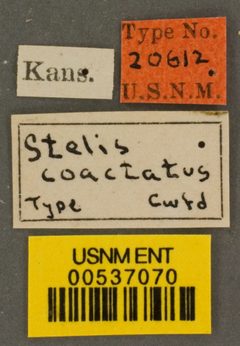
Crawford, 1916
Compressed Dark Bee
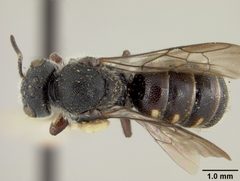
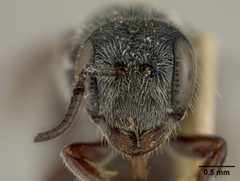
Stelis coarctatus is a North American of cleptoparasitic in the Megachilidae. As a member of the Stelis, it is a cuckoo bee that lays in the nests of other bees, typically megachilid . The species was described by Crawford in 1916 and has been recorded from Vermont in the northeastern United States. Like other Stelis species, it lacks pollen-collecting structures and depends entirely on host provisions for its offspring.
Pronunciation
How to pronounce Stelis coarctatus: //ˈstɛlɪs koʊˈɑrkˌtætəs//
These audio files are automatically generated. While they are not always 100% accurate, they are a good starting point.
Identification
As a Stelis , S. coarctatus likely exhibits the compact, dark-colored body form typical of the , often with reduced hairiness compared to non-parasitic megachilids. Specific diagnostic features distinguishing it from are not documented in available sources. Identification to species level requires examination of morphological characters such as genitalia and other fine structural details.
Images
Distribution
Recorded from North America, specifically from Vermont in the northeastern United States. GBIF distribution records indicate presence in North America with confirmed occurrence in Vermont, US.
Host Associations
- Megachilidae - Stelis are that lay in nests of other megachilid bees; specific species for S. coarctatus are not documented
Behavior
As a cleptoparasitic , females enter nests to deposit . Larvae consume the pollen provisions intended for the host's offspring. This parasitic lifestyle eliminates the need for nest construction or pollen collection by .
Ecological Role
Acts as a within , potentially regulating of megachilid . The ecological impact of this specific species has not been quantified.
Similar Taxa
- Stelis ornatulaBoth are North American Stelis ; S. ornatula (Spotted Dark ) has been recorded in the UK and is distinguished by specific markings and distribution
- Other Stelis speciesApproximately 60 Stelis occur in North America; precise identification requires examination of morphological characters
More Details
Taxonomic note
The specific epithet is sometimes encountered as 'coarctata' (feminine) in older literature, but the correct form following Crawford's 1916 description is 'coarctatus' (masculine), matching the masculine gender of the Stelis.
Sources and further reading
- BugGuide
- GBIF taxonomy match
- iNaturalist taxon
- Catalogue of Life
- Study Describes Three New Species of Fruit Flies and Revises Their Genus
- Bare ground experiments to help save rare bees and wasps - Buglife Blog - Buglife
- An Introduction to the Wonderful World of Wasps: Meet the Heath Sand Wasp - Buglife Blog - Buglife