
Zagryphus nasutus
(Cresson, 1868)
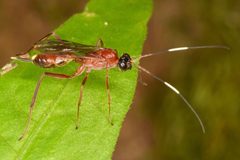
Zagryphus nasutus is a of ichneumon in the Ichneumonidae, Ichneumoninae. First described by Cresson in 1868, this species belongs to a characterized by distinctive morphological features of the . The genus Zagryphus was established by Heinrich in 1962 with Z. nasutus as the type species. Like other ichneumon wasps, it is presumed to be , though specific relationships remain undocumented. The species has been recorded in the southwestern United States, particularly in Arizona.
Pronunciation
How to pronounce Zagryphus nasutus: /ˈzæɡrɪfəs nəˈsuːtəs/
These audio files are automatically generated. While they are not always 100% accurate, they are a good starting point.
Identification
The Zagryphus is distinguished by an unusual bearing a swelling that becomes bipartite below, branching toward the margin—a feature referenced in the specific epithet "nasutus" (meaning "large-nosed"). Females are amblypygous, possessing a very short ovipositor and broad subgenital plate rather than the elongated "tail" typical of many ichneumonids. The coloration includes patterns common among southwestern Ichneumoninae, with reddish-brown and yellow markings.
Images
Distribution
Recorded from the southwestern United States, specifically Arizona. The type series includes specimens from Florida Canyon and Sabino Canyon in the Santa Rita Mountains, and Sabina Canyon near Tucson, at elevations around 4000 feet.
Ecological Role
As a member of Ichneumonidae, likely functions as a of other insects, contributing to of potential . The amblypygous condition of females suggests oviposition into mature larvae or rather than pupae of Lepidoptera, based on comparison with related ichneumonine .
Similar Taxa
- Neamblyjoppa nasutusFormerly considered potentially or closely related; Zagryphus nasutus was previously placed in or confused with Neamblyjoppa. The Zagryphus was separated based on clypeal .
- Poecilopompilus spp.Similar general appearance and coloration may cause superficial confusion with spider wasps; however, ichneumonids can be distinguished by wing venation and with more segments.
- Polistes spp.Vespid paper wasps share similar color patterns and body form, but differ in wing folding, structure, and absence of the ichneumonid clypeal specialization.
More Details
Taxonomic history
The Zagryphus was established by Heinrich in 1962 based on three female specimens, with Z. nasutus as the type . Heinrich described the species from material in the Canadian National Collection and Henry Townes' collection. The unusual clypeal structure was considered the most critical diagnostic character for the genus.