
Oxyrrhexis
Förster, 1869
Species Guides
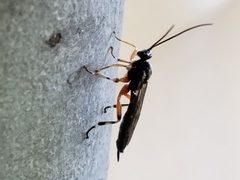
1Oxyrrhexis is a of ichneumon wasps in the Pimplinae, tribe Ephialtini, belonging to the Polysphincta genus-group. The genus comprises four described worldwide. All species are koinobiont ectoparasitoids specialized in attacking spiders, primarily of the Theridiidae, though one record documents of a titanoecid spider. The genus was first recorded from Egypt in 2017.

Pronunciation
How to pronounce Oxyrrhexis: //ˌɒksɪˈrɛksɪs//
These audio files are automatically generated. While they are not always 100% accurate, they are a good starting point.
Identification
Members of Oxyrrhexis can be distinguished from other Polysphincta -group genera by morphological characters associated with the Pimplinae and Ephialtini tribe. Specific diagnostic features for the genus are not detailed in available sources. -level identification requires examination of morphological characters described in original species descriptions.
Images
Habitat
Ground-living environments, based on the spider Enoplognatha serratosignata being ground-living. associations likely follow those of their theridiid spider hosts.
Distribution
West Palaearctic (two ); Norway (type locality for O. zephyrus); Alaska (O. carbonator texana); Finland, Sweden, Norway (O. carbonator nominate subspecies); Egypt (first record for , O. carbonator). GBIF records indicate presence in Denmark, Norway, and Sweden.
Host Associations
- Enoplognatha serratosignata - Theridiidae; confirmed of O. zephyrus in Norway
- Steatoda bipunctata - Theridiidae; confirmed of O. carbonator in northern Europe based on extensive reared material from Finland, Sweden, and Norway
- Nurscia albomaculata - Titanoecidae; first record for Polysphincta -group, documented from Egypt
Life Cycle
Koinobiont ectoparasitoid development on spider . The develops externally on the living host, which continues to feed and grow until the parasitoid completes development. Cocoons are formed after the host is consumed.
Behavior
Specialized attacking spiders. Exhibits koinobiont ectoparasitoid lifestyle, allowing the to remain active during parasitoid development.
Ecological Role
regulating of theridiid spiders. Functions as a natural agent of spider populations in ground-living and associated .
Similar Taxa
- Other Polysphincta genus-group generaShares koinobiont ectoparasitoid lifestyle on spiders; distinguished by morphological characters of the Pimplinae and Ephialtini tribe
Misconceptions
Earlier literature records of Oxyrrhexis carbonator parasitizing spider other than Theridiidae and non-spider are considered erroneous based on extensive reared material from northern Europe.
More Details
Taxonomic placement
Belongs to the Polysphincta -group within the Pimplinae, tribe Ephialtini
Host specificity
Strongly specialized on Theridiidae spiders, with one documented exception (Titanoecidae). The Egyptian record of O. carbonator from Nurscia albomaculata represents an unexpected and the first such record for the entire Polysphincta -group
Sources and further reading
- BugGuide
- Wikipedia
- GBIF taxonomy match
- iNaturalist taxon
- NCBI Taxonomy
- Catalogue of Life
- Natural history of Oxyrrhexis zephyrus sp.n. (Hymenoptera: Ichneumonidae), a parasitoid of Enoplognatha serratosignata (Araneae: Theridiidae), with notes on taxonomy and other host species of Oxyrrhexis
- First record of the genus Oxyrrhexis Foerster, 1869 (Hymenoptera: Ichneumonidae: Pimplinae, Ephialtini) for the fauna of Egypt, with an unexpected new host record