
Cidaphus australis
Cushman, 1924
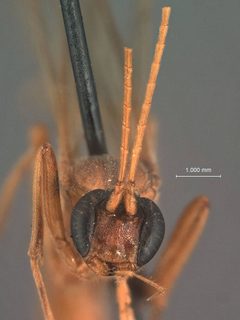
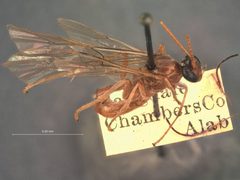
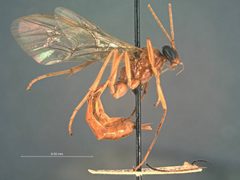
Cidaphus australis is a of ichneumonid described by Cushman in 1924 during his taxonomic review of North American Cidaphus. It belongs to the large Ichneumonidae, a diverse group of wasps. The species was distinguished from C. paniscoides and C. occidentalis based on diagnostic morphological characters. As with most ichneumonids, it is presumed to be a parasitoid, though specific relationships remain undocumented. The species is known from very few records, with only two observations documented in iNaturalist.
Pronunciation
How to pronounce Cidaphus australis: //sɪˈdeɪfəs ɔːˈstreɪlɪs//
These audio files are automatically generated. While they are not always 100% accurate, they are a good starting point.
Identification
C. australis can be separated from the related C. paniscoides and C. occidentalis by diagnostic characters established by Cushman (1924), though these specific characters are not detailed in available sources. The Cidaphus belongs to the Ichneumonidae, whose members typically possess long, multi-segmented , a slender petiole ( waist), and often elongated ovipositors relative to body size.
Images
Distribution
North America; originally described from the United States. The specific type locality is not explicitly stated in available sources beyond being a North American . The C. occidentalis has a from Revelstoke, British Columbia, Canada, and C. paniscoides is recorded from northeastern United States (New Hampshire, New York, Pennsylvania, Maryland), suggesting the may have broader distribution in temperate North America.
Similar Taxa
- Cidaphus paniscoidesSympatric in eastern North America; distinguished by diagnostic characters provided by Cushman (1924)
- Cidaphus occidentalisWestern North American described in same revision; type from British Columbia, Canada
Sources and further reading
- BugGuide
- GBIF taxonomy match
- iNaturalist taxon
- Catalogue of Life
- They Know Their Insects | Bug Squad
- Destination Sonoran Desert: A time to sting for the Giant Hairy Desert Scorpion, 'Hadrurus arizonensis' — Bug of the Week
- Cimbicidae | Beetles In The Bush
- Nature's Night Lights - Buglife Blog - Buglife
- The Role of Macro Photography in Entomology - Buglife Blog - Buglife
- THE GENUS CIDAPHUS IN CANADA (HYMEN.; ICHNEUMONIDAE)