
Cratichneumon sublatus
(Cresson, 1864)
Cratichneumon sublatus is a of ichneumon in the Ichneumonidae. It was described by Cresson in 1864 and belongs to the large Cratichneumon, which contains numerous wasp species. The species has been documented through 172 iNaturalist observations, indicating it is encountered with moderate frequency by naturalists. As a member of Ichneumonidae, it is presumed to be a parasitoid of other insects, though specific records for this species remain poorly documented.
Pronunciation
How to pronounce Cratichneumon sublatus: /kɹætɪkˈnjuːmən sʌbˈlɑːtəs/
These audio files are automatically generated. While they are not always 100% accurate, they are a good starting point.
Identification
Specific diagnostic features distinguishing C. sublatus from are not documented in available sources. Identification to level in Cratichneumon generally requires examination of wing venation patterns, details of the propodeum , and male genitalia structure.
Images
Appearance
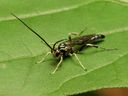
Medium-sized ichneumon with typical characteristics including a slender body, long multi-segmented , and an elongated ovipositor in females. Coloration and detailed morphological features specific to C. sublatus are not well documented in readily accessible sources.
Distribution
North America. The was described from specimens collected in the eastern United States, and iNaturalist observations suggest ongoing documentation across parts of its range.
Ecological Role
Presumed , as are all members of Ichneumonidae, though specific and ecological impacts remain undocumented for this .
Similar Taxa
- Other Cratichneumon speciesThe Cratichneumon contains many morphologically similar ; accurate identification requires detailed examination of structural characters not visible in field observations.
More Details
Taxonomic history
Originally described by Ezra Cresson in 1864, this has remained within the Cratichneumon throughout its taxonomic history. The genus is one of the larger genera within Ichneumonidae, with species predominantly distributed in the Holarctic region.