
Stenarella domator
(Poda, 1761)
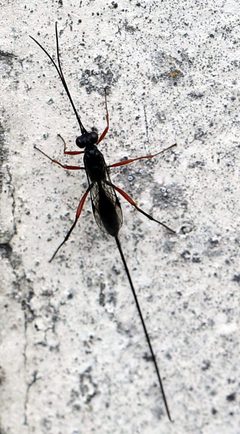
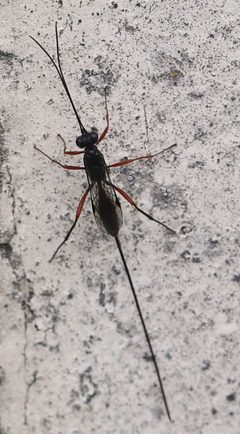
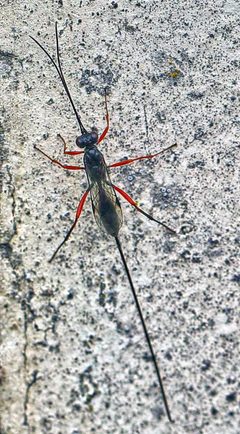
Stenarella domator is a western Palaearctic ichneumonid recently introduced to the Nearctic region. It belongs to the subtribe Osprynchotina within the Cryptinae. The is an ectoparasitoid that targets Hymenoptera nesting in mud or earth substrates. Its establishment in North America represents a notable range expansion for this lineage.
Pronunciation
How to pronounce Stenarella domator: /ˌstɛnəˈrɛlə doʊˈmeɪtɔr/
These audio files are automatically generated. While they are not always 100% accurate, they are a good starting point.
Identification
Member of the subtribe Osprynchotina; identification to in the Nearctic region requires reference to the key provided in the primary source distinguishing Nearctic genera of this subtribe. Specific diagnostic features for S. domator relative to other Stenarella are not detailed in available sources.
Images
Habitat
Nests of Hymenoptera constructed with mud or earth. The occupies the nest microhabitat of its rather than free-living vegetation.
Distribution
Native to the western Palaearctic region with confirmed records from Belgium, Denmark, and Norway. Introduced to and established in the Nearctic region; specific Nearctic localities not detailed in primary source.
Host Associations
- aculeate Hymenoptera which use mud/earth in their nests - ectoparasitoidprimary source explicitly states association
Life Cycle
Ectoparasitoid development on Hymenoptera within mud/earth nests. Specific details regarding placement, larval instars, site, or developmental duration are not provided in available sources.
Ecological Role
of ground-nesting or mud-nesting Hymenoptera. As an introduced in the Nearctic, its ecological impacts on native remain unstudied.
Human Relevance
Documented as an in the Nearctic ichneumonid fauna; implications for or pest management potential are not assessed in available literature.
Similar Taxa
- other Osprynchotina genera in Nearcticsubtribe members share as of mud/earth-nesting ; distinguished by the key to Nearctic provided in the primary source