
Adelognathinae
Adelognathinae is a of ichneumonid wasps comprising ectoparasitoid that attack larvae. Members exhibit koinobiont or idiobiont strategies, with some species displaying unusual reproductive including deposition directly from the genital opening rather than through the ovipositor. The subfamily is best documented from Britain, where detailed studies have revealed rapid larval development and complex -feeding .
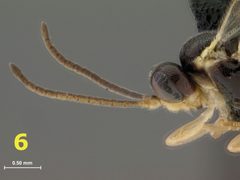
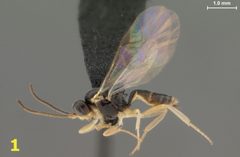
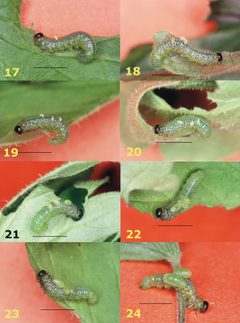
Pronunciation
How to pronounce Adelognathinae: /ˌædɪloʊɡˈnæθɪniː/
These audio files are automatically generated. While they are not always 100% accurate, they are a good starting point.
Identification
Adelognathinae can be distinguished from other ichneumonid by their association with and their characteristic ectoparasitoid . Females possess an ovipositor modified for spreading adhesive substances rather than for deposition, as eggs are laid directly from the genital opening onto the host dorsum. Final instar larvae are relatively featureless compared to other ichneumonid larvae.
Images
Habitat
Associated with supporting Tenthredinidae larvae, particularly on Ribes uva-crispa (gooseberry) and related plants. The occurs in environments where sawfly larvae feed on woody or herbaceous vegetation.
Distribution
Documented from Britain; broader distribution within the Holarctic likely but insufficiently documented.
Seasonality
; active during periods when larvae reach late developmental stages.
Diet
females -feed on haemolymph and sometimes other tissues obtained from wounds made by their . Larvae are ectoparasitoids feeding on host tissues.
Host Associations
- Nematus leucotrochus - primary Tenthredinidae larvae, late-stage
- Ribes uva-crispa - plantfood plant of primary
Life Cycle
. deposited on dorsum. Larval development completes in approximately 70 hours at 18–22°C, with five instars detected. Host continues feeding for roughly the first half of larval development. Winter passed as enclosed in a tough cocoon.
Behavior
Females temporarily paralyze with venom injection during oviposition. Prior to deposition, females spread adhesive from the ovipositor to prepare the attachment site. Host-feeding may occur concurrently or non-concurrently with oviposition; when non-concurrent, it may be destructive or non-destructive. Host defensive reactions to prospecting females have been observed. Some are slightly gregarious.
Ecological Role
Ectoparasitoid of tenthredinid larvae, potentially contributing to regulation of sawfly on Ribes and related plants.
Similar Taxa
- other Ichneumonidae subfamiliesAdelognathinae differs in depositing directly from the genital opening rather than through the ovipositor, and in their specific association with larvae as
- idiobiont ectoparasitoid waspsSome Adelognathus are koinobiont ( continues development after ), distinguishing them from typical idiobiont ectoparasitoids that permanently paralyze hosts
More Details
Unusual egg deposition
The non-ovipositor deposition of —direct from the genital opening—is rare among non- Hymenoptera and appears to arise when maintain direct bodily contact with during oviposition.
Host-feeding flexibility
-feeding is not obligatory and shows complex timing: concurrent with oviposition, or non-concurrent and either destructive or non-destructive to the host.