
Triraphis harrisinae
(Ashmead, 1889)
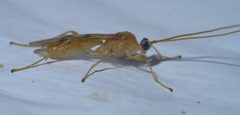
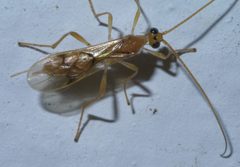
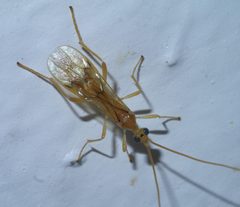
Triraphis harrisinae is a of in the Braconidae, first described by Ashmead in 1889. The Triraphis belongs to the diverse ichneumonoid wasp superfamily, members of which are predominantly parasitoids of other insects. This species is rarely encountered in collections and field observations, with only 8 observations recorded on iNaturalist as of the data cutoff.
Pronunciation
How to pronounce Triraphis harrisinae: //traɪˈræfɪs ˌhærɪˈsiːni//
These audio files are automatically generated. While they are not always 100% accurate, they are a good starting point.
Identification
Members of the Triraphis can be distinguished from other braconid wasps by the presence of three distinct carinae (ridges) on the propodeum, a feature reflected in the genus name. Specific identification of T. harrisinae requires examination of morphological characters including wing venation patterns and genitalia structure; no reliable field identification characters have been documented.
Images
Distribution
North America; specific range details are poorly documented due to limited collection records.
Host Associations
- Harrisia - The specific epithet 'harrisinae' suggests an association with plants in the Harrisia (cacti), likely indicating the parasitizes insects associated with these plants. This remains speculative without direct host records.
Ecological Role
As a member of Braconidae, this likely functions as a , contributing to of insects. The specific ecological role of T. harrisinae has not been studied.
Similar Taxa
- Other Triraphis speciesShare the diagnostic three-propodeal-carinae structure; require detailed morphological examination to distinguish.
- Other Braconidae generaLack the three distinct propodeal carinae that characterize Triraphis.
More Details
Nomenclatural note
The specific epithet 'harrisinae' is grammatically unusual, employing the genitive plural of a plant (Harrisia) rather than a more typical singular or patronymic form. This suggests Ashmead may have intended to indicate association with multiple Harrisia or cacti generally.
Data scarcity
This is among the most poorly known in the Triraphis, with minimal specimen records and no published biological studies. The low observation count on iNaturalist (8 observations) reflects genuine rarity rather than identification difficulty alone.